An excerpt from Zechariah’s Prophecy, directed to his son, John the Baptist, the forerunner of all truly Christian ministry, the one who led prepared the way of the Lord through a ministry of repentance:
“And you, child, will be called the prophet of the Most High; for you will go before the Lord to prepare his ways, to give knowledge of salvation to his people in the forgiveness of their sins, because of the tender mercy of our God, whereby the sunrise shall dawn upon us from on high and to give light to those who sit in darkness and in the shadow of death, to guide our feet into the way of peace.”
Written shortly after I began pastoring at Crossroads
I walked into my new office this morning and noticed one of the leftover books on the shelf called A New Kind of Christianity by Brian McLaren. In the wake of McLaren’s growing popularity I familiarized myself with his “work” a few years ago and read this book, as well as A Generous Orthodoxy, and one other forgettable title which I have since forgotten. Let me summarize the major theme found in each of McLaren’s books in this way. The ‘new kind of Christianity’ he is talking about can simply be called a “gospel” without repentance.
The good news of Jesus Christ comes as the free gift of grace, and that sounds exactly like this: “Repent, and believe in the Gospel” (Mk. 1:15). We’re quite happy to talk about the swinging door of the Gospel, but how is it that we so often avoid mentioning the threshold of repentance?
Since grace is free, it is assumed, we mustn’t associate our it with any costs, any requirements, anything on our end that might be expected of us and so nullify grace as grace. But the fact is this: grace is free only because we cannot afford it. Its value is, in fact, immeasurable, because it is based on the infinite worth of Jesus Christ. It’s true, God isn’t looking for us to give him any-thing. He’s looking for us to give ourselves.
Grace is spilt blood, not melted ice cream. We should acknowledge, therefore, that while there is nothing of worth we can offer in exchange for the grace of God it is only so because God is not looking for us to barter with him with little pieces of our lives and pocketbooks. That’s principally no different than the old bartering system of sacrifices and burnt offerings, the one Zechariah-the-priest was employed by before he had to take a long leave of absence for some quiet time with God (cf., Lk 1:20).
But the priesthood and the whole sacrificial system was about to be turned on its head. No longer would man offer sacrifices to God for their sins, because God was about to offer a sacrifice to man, once for all (Heb. 7:27). The stakes were being raised from sacrificial lambs on the altar to the sacrificial Lamb on the cross. Herein lies the heart of the Gospel, the essence of Christmas. The Gospel reveals that God doesn’t merely want our “goods and services”—as though God were in need of anything at all, as though everything weren’t already his (Ps. 24!). Rather, he wants us, all of us, so he gave all of himself to us. The gift of Christmas is God himself!
God has removed the barter system altogether. He removed the distance that that economy creates. He wants us for us because he loves us—like a father but more than father—and only when we are awakened to that basic truth will we be bold enough to unfetter our desires to want him back. Can we dare desire to want all of God?! Can we truly pray the audacious kind of prayer that A.W. Tozer prayed when he said,
I want the whole presence of God Himself, or I don’t want anything at all to do with religion… I want all that God is or I don’t want anything at all.
Often, we’re too timid for such prayers. When it comes to entering into that self-giving gift exchange with God, we are our own worst enemies, because we continually fall back into the barter system. We do “this and that” for God hoping to appease him. We tithe little pieces of our lives as though God were in need of our support. And in so doing, we find ourselves constantly negotiating with our conscience over what is “enough” for God, being tossed about between our own unrighteousness and self-righteousness, wondering why we never feel wholly at peace with God, with one another, and with the mirror. The reason is simply this: nothing we can offer will ever be enough.
But Christ is enough! And God has already offered himself to us in Him. Merry Christmas!
So what does this have to do with repentance? With Zechariah?
Repentance does not mean “do something differently,” or even the popular definition, “turn around.” It means, quite simply, “change your mind.” It means the world and the ways of God we have always imagined have been invaded by an entirely different world by way of God himself invading ours. Christmas, God with us, the Son of God become Son of Man, the final sacrifice, resurrection of the dead. Zechariah, and the rest of the world, was going to have to repent, because this way of seeing the world and the ways of God is entirely unnatural and unexpected. For Zechariah, the whole priestly bartering system was about to be rendered obsolete. Christ was giving us all of himself. All altars would be closed for business. This Lamb would need no assistance, nor assistants, at the altar of his sacrifice.
So think about what we’re doing when we cheapen the idea of repentance, minimizing the cost of discipleship, making it out as if people can nickel and dime their way to God because, well, grace is “free” so surely our response can be “cheap.” What we are doing is inviting people back into the barter system, again putting distance between them and God and denying them the free grace of God, the only grace that brings true freedom: spilt blood, not melted ice cream. As Bonhoeffer put it, “When Christ calls a man he bids him come and die.” Therein lies the fullness of life, indeed the fullness of God, to all who are “crucified with Christ” (Gal. 2:20).
But it’s not quite Christmas yet, so we shouldn’t get ahead of ourselves. For now, we need to think about changing our minds, repentance. How can the Church rediscover the language of repentance, calling people to “Repent, and believe the Gospel”? Because as long as the Gospel doesn’t require whole-life-repentance, as long as it is something we can fit into our budget and our day timer—as long as it is anything other than all ourselves—we have not received it as it is: all of God in Emmanuel. And in that case, we need to stop selling ourselves short, and selling others short, and reclaim the cost of discipleship: it will cost you not a penny less than the whole life of God, which is exactly the cost that was paid in Christ. That is what God sent his Son to give us.Himself. To make us sons and daughters in Him. So let’s respond this Christmas with the only gift God truly wants from us: us!
God loves you. God wants to draw you into an eternal exchange of love with him. God has given you everything to make that possible. Give him the gift he desires this Christmas. Receive him. Receive life. Receive Jesus—all of God in exchange for all of you, forever.
For this reason I bow my knees before the Father, from whom every family in heaven and on earth is named, that according to the riches of his glory he may grant you to be strengthened with power through his Spirit in your inner being, so that Christ may dwell in your hearts through faith—that you, being rooted and grounded in love, may have strength to comprehend with all the saints what is the breadth and length and height and depth, and to know the love of Christ that surpasses knowledge, that you may be filled with all the fullness of God.
“Then Herod, when he saw that he had been tricked by the wise men, became furious, and he sent and killed all the male children in Bethlehem and in all that region who were two years old or under, according to the time that he had ascertained from the wise men” (Mt. 2:16).
We simply cannot wish it away. The Christmas story comes to us in a world of sin, evil, violence, suffering, death, murder, even infanticide. A Baby is born and laid in a manger, countless others murdered and laid in graves, and all under the dominion of “king Herod.” The true Christmas story is about the world’s true King coming to restore his dominion in a world under the dominion of death—human dominion. Below is a reflection about the day I became more convinced than ever about the futility, the destructiveness, of my own dominion, one of the days I began to truly long for Christ to come back and restore his dominion.
May God teach us how to long for his Tomorrow.
Originally Published as “Eulogy for a Beast: Life & Death at the Feet of the Master“
Pulling out of my driveway I felt my tires roll over something. I noticed it lacked that dispersive crunching sound common to toys under the tire. Outdoor toys typically have exoskeletons. This felt soft and intact. When I turned to see what it was my heart sank. Ringo was lying on his side, his little legs stretched wide and vulnerable and unrelaxed.
I jumped out of my truck and ran to him. He was alive and focused, straining with all his will to fill his crushed lungs with air. Every ten or so seconds he would choke down a hiccup-full. He was too focused on trying to breath to acknowledge my presence. I bet that broke his heart.
For the last 14 years Ringo has lived to acknowledge my presence. Before he lost his hearing, he would hear my presence before I ever entered the door, where I would find him already waiving at me with his tail. Even after he lost his hearing I often found him there, waiting and waving, who knows for how long. If he didn’t greet me at the door, the moment I walked into his field of vision he would perk up his big square head, struggle up with his little old legs, and carry his big long body over to my feet.
There were two places Ringo lived: on his blanket by the wood stove and at my feet. While I was gone he would lay on his blanket by the stove. While at home he would sit at my feet when I sat, stand at my feet when I stood, and follow my feet when I walked. Sometimes I would acknowledge his presence, often I would not. But he never took it personally. He never repaid neglect for neglect, evil for evil. He was always more Christian of a dog than I am a man.
On average I probably stepped on or tripped over Ringo about once a week, sometimes responding apologetically, other times erupting volcanically, depending on my mood. But he was always forgiving of my mistakes and remorseful under my wrath, always showing deference to my judgment, whether just or unjust, whether I treated him like the family dog or my personal scapegoat. Regardless, nothing I ever did or didn’t do diverted his good will toward me. He was unwavering, a far more principled dog than I am a man. But I suppose to him I was more than a man. I was his master. And he lived to affirm me as such. He lived to sit at my feet.
When God created Ringo he used only one substance: one hundred percent pure, undiluted loyalty. His form, however, was not so pure. He was an admixture of odd proportions, the body of a wiener dog, the head of a pit bull, and the howl of a Canaanite. But shapes and sizes aside, his substance was sure. He had the pure and undivided heart of a saint—until I broke it in two with my truck.
Now he lay there, divided, no doubt wishing he could acknowledge my presence in this rare moment I was acknowledging his with such undivided attention. I was more present to him in that moment than I had ever been in his 98 dog-year-old life, with my face pressed gently on his neck, my hands stroking his head, as I told him over and over how sorry I was and how good of a dog he was. But it took all the energy he had just to live, to keep breathing straw-fulls of breath. So he just couldn’t acknowledge my presence—he was hardly able even to acknowledge his own.
I was torn. I didn’t know what to do or what he would want me to do. I wanted so badly to assure him that he had done nothing wrong, that I was not displeased with him, that I did not hurt him on purpose, that he was a good dog and I was a bad master. I wanted him to know that this was not the intent of my will toward him but it was the fault of my will, my reckless and wayward will, and I was so sorry.
Ringo deserved a better master than the one I proved to be in the end. I wanted him to know that I had failed in my responsibilities to take care of him, but that I have a Master who has not failed, and that the Master who gave me dominion over him (Gen. 1:28) would return in the end to take his dominion back, to fix this broken world and Ringo’s broken heart. I wanted him to know that on that day I will join Ringo’s side and we’ll sit together at our Master’s feet.
I wanted to assure him of all this but I think I was just making it worse. I think I was just consoling myself and prolonging his suffering, if not adding to it with my disquietedness, if not making him feel guilty, like he was failing me. He probably felt he was not giving me the honor and attention I deserved, which he spent his whole life giving me, despite the fact that I never deserved it.
Making the decision to kill Ringo was not the hardest decision I had to make—I wanted his suffering to end immediately. The hardest decision was leaving him to fetch my log-splitting axe from the woodshed, the same one I use to split the wood to burn the fire to keep the house and the dog warm. I knew I had to end his suffering but I hated to leave him for even a second. I did not want to forsake him for a moment, withdrawing my presence from him, leaving him lying there alone in the crooked shape of a Why? as he suffered out his final hour on earth.
Ringo proved his whole life that he valued my presence more than his comfort, especially in his latter days as he limped around in my shadow, doing his best to keep up with someone 62 years his younger (when you do the dog-math), so I wanted to give him the gift of my presence as far as I could possibly extend it into that void which takes all presence away. I tried to yell for Keldy to grab my axe, but she was inside putting the kids down for a nap and couldn’t hear me. So I told him again how good of a dog he was, how sorry I was, and that I would be right back. I ran as fast as I could to the woodshed, cursing the day, damning the divisions in my heart and the one in Ringo’s too.
I returned in a matter of seconds and knelt again as before, cheek to cheek, doing my best to embrace him without adding more pain to his sadness and suffering. I told him again how sorry I was, how good of dog he was, and that I loved him so much. He gasped again, in deference, in reverence, probably trying to tell me he too was sorry for getting in my way again—he had done nothing wrong, the fault was all mine—reassuring me that I was a good master and that he loved me too—he deserved far better, his love was far purer than mine. He was probably offering me forgiveness for running him over with my truck and for now having to kill him, for he knows I often know not what I do. He had never once held a grudge against or withheld his forgiveness from me. As far as I could tell, he had never kept a record of wrongs against anyone. He loved more like my Master than any man I’ve ever met.
I put my hands under his head and hips and pulled him off the edge of the driveway into a bed of dead pine needles as gently as I could, leaving a crimson smear against the black surface and all over my unclean hands. He winced subtly, his eyes widening in acknowledgment of a more acute moment of pain. I winced too. I wanted to scream, I wanted to breath fire, I wanted to pour out my wrath on sin and death and suffering, I wanted to punish the darkness with searing light and the silence with shattering thunder. I wanted to burn the day.
But I kept quiet. I didn’t want to add any more panic to the moment already wrapping around Ringo’s thick copper neck, shortening his breath in the long dawn of night. So I told him one last time that I was so, so sorry, that he had done nothing wrong, that he was such a good dog, that none of this was his fault, that I’m the guilty one, that it was because of my divided heart that his was now broken, that his blood was forever on my hands. I was the worst of all the world in that moment, the chief among sinners and traitors and murderers. It would take no less than hellfire to burn the stain off my hands, or perhaps burn my hands off the stain.
Ringo, like all the beasts of the field, would have to die because I willed him to death, because I willed the death of all things. God entrusted his creaturely world to human care, and we turned on God and on each other and on all God’s critters and creatures. We were created to be God’s image-bearing masters of all the living in his good garden world (Gen. 1-2) but became blood-thirsty tyrants of a shadowy desert wasteland of our own making (Gen. 3-rest of the Bible).
All of our creation companions now rightly live in the “fear and dread” of us (Gen. 9:2), most species simply keeping a safe distance from us, preferring flight over fight unless backed into a corner. But one species above the rest has not allowed their fear of our dominion to drive them to rebel against it. They insist on acknowledging our presence as the presence of royalty, humbly moving toward us, bowing before us, sitting at our feet. They can still perhaps see reflections, refractions rather, of Light splintering through us from the shadows that come out of us. Ringo seemed only to see my God-given light as though I were its source, as though I weren’t its eclipse. So he trusted me, his master, with his life. But I betrayed him, the most loyal of all God’s creatures. He entrusted his life to me and I ensnared him in my death.
If I’d had a means of killing him quickly without releasing him from my arms I would have used it, but I had nothing of the sort. I hated having to withdraw my presence from him, to forsake him in his moment of death, but I had no choice. Death makes its demands. I had to withdraw my presence to end the presence of his suffering, the only presence he would ever know again until he knew none at all. So he had to die alone, at the hand of his master, who stood away from him, against him, at arm’s length.
I kissed him on the mouth, like Judas, snapped back like a rattlesnake coiling up to strike, and in a dark storm of twisted fury I sent all my rage at that godforsaken moment through the broad side of my log-splitting axe into the left side of my loyal dog’s head, condemning him to the death I deserve, the death I created.
His legs dropped, his body relaxed, and his life ended where it longed to live forever—at my feet.
I dropped to my knees and put one hand over his heart and the other over my face—the moment was naked and I was ashamed. Now that I was certain he was no longer aware of my presence, that I could add no more pain and unrest to his life, I opened my mouth and filled my neighborhood with a curse.
Mark says that when Jesus died he “uttered a loud cry and breathed his last” (Mk. 15:37). There are things that should be said near the point of death if at all possible—things like “I’m sorry” and “I forgive you” and “I love you.” But perhaps something must be said at the point of death itself, at death itself, and perhaps that can only come out as a loud cry or a groaning, or thundering, curse.
That is what love sounds like at death. Love hates death with a Passion. Love screams at death. Love “casts Death and Hades into the lake of fire” with unrelenting wrath and inexorable fury (Rev. 20:14). Love condemns death as the unforgivable sin.
I used to imagine Jesus sitting silently at the right hand of God until he returns. I don’t anymore. I think he is screaming. I think all of heaven is raging against human sin and death in a loud, grinding battle cry that will not cease until Jesus returns on the clouds of heaven to give form to his thunder in a bolt of Light that strikes death in a merciless command of life:
“For the Lord himself will descend from heaven with a shout of command…and the dead in Christ will be first to rise” (1 Thess. 4:16).
I think Ringo will hear that command. I don’t know if all dogs go to heaven—who am I to judge?—but I believe Ringo will. I was Ringo’s master. If I have any say in whom or what Jesus raises from the dead when he returns I suppose it would be limited to those creatures over whom he gave me dominion. As Ringo’s master, therefore, I hereby make an appeal for his life:
Our Father in heaven, I have come to the end of my dominion. I confess that I was never fit to be another creature’s master, much less such a good and faithful one as Ringo. I hereby offer up the dominion you gave me and ask that you take it back and give it to your Son, King Jesus, who is fit to be Ringo’s Master, my Master, Master of all. In my kingdom, everything ends in death because of my reckless and wavering will. I get it now. I’ve learned my lesson. I don’t want to be king anymore. I want a Master who can keep the world alive, the garden alive, Ringo alive, life alive. Your kingdom come, your will be done, on earth as it is in heaven. Amen.
Surely, Ringo will be included in the resurrection. If God’s grace brings resurrection to the sinners he loves, should we not expect it also brings resurrection to those creatures most loyal to the sinners he loves? He’s the one who created them, no doubt to teach us something about loyalty and unconditional love, about friendship and humility and forgiveness and joy and trust. Most every dog I’ve ever met knows more about all of these than any man I’ve ever met. Besides, innocent dogs in heaven makes a hell of a lot more sense than sinful sinners in heaven, so I’ll keep looking forward to a reunion with that great cloud of K9s who will no doubt lead the way in showing us how to properly live at our Master’s feet when he returns.
So we corralled the boys and Sissy together for a “family meeting.” My children have never known life without Ringo. He was part of the reality into which they each were received, an odd but delightful part of the family. Ringo, on the other hand, had known life without my children, a life where he got far more loving attention and far less physical abuse. But he was raised in the south and had the gift of hospitality. He never repaid horsey rides with doggy bites. I was actually a little concerned about how he would react to the kids at first, because he did once kill our neighbor’s (evil) goat, but he proved to be discerning. He knew the difference between the children and the goats, and the closest he ever came to biting my children was licking the sticky off their faces.
Our tone was lower and our herding efforts more firm and focused than usual. They kept asking what we were doing and why we were meeting, and we kept not answering. We eventually got them all seated on the couch in the living room, where Ringo could usually be found if he weren’t found at my feet. It was the place his presence could be felt most, and now, therefore, his absence, which already had begun to swell out of proportion to the limited spaces his presence formerly inhabited: in the heaviness on my face, the cracking of my voice, and, indeed, the loneliness at my feet.
It’s as though a creature’s body veils an essence that is only fully disclosed after it is broken, after it is dead and gone. Only then the veil is torn, releasing the true nature of the life represented in the body, the life now dead in the body. I kill a mosquito and it is gone. I kill my dog and he begins to haunt me, his absence more revealing than his presence. A centurion kills a Man and God begins to haunt him. Out of His absence comes the terrifying confession in a shower of water and blood (Mt. 27:54; Mk. 15:39).
I told them I had some really sad news to share with them: “Ringo died today.” A breathless look of surprise contorted each of the boys’ faces and was followed by three distinct responses: Maccabee (3) trying to comfort me and touch my face, Ryser (4) asking troubled and probing questions about Ringo’s death and the nature of death itself, and Kezek (6) entering the ebb and flow of those initial impact waves of grief, wavering between questioning incredulity and wailing sorrow.
I stumbled over words trying to respond, Keldy helping, clarifying, filling in the blanks as I would get choked up. It’s hard to watch your children’s first real concrete encounter with death. I think Kezek and Ryser both encountered death yesterday. It brushed against Ryser’s mind and pierced Kezek’s heart. I think it was once removed from Maccabee. He encountered it by way of my grief, his compassion for me shielding him from too direct an encounter. But each of their responses only took me deeper into my own encounter, because I knew the death of their first dog would be their first step toward discovering the death of all dogs, all people, all the living, including each of them and the ones they’ve shared their life and presence with from birth.
I told them we would now have to say goodbye to Ringo and bury him in the backyard, between the garden and the briar patch. Keldy had wrapped Ringo in his blanket and I had laid him at the edge of the garden next to one adult- and three kid-sized shovels so the boys could help dig. I uncovered the intact side of Ringo’s face so the boys could pet him one last time. I tried to press Ringo’s eyes shut, but they insisted on staying open. I think he was still trying to acknowledge my presence.
We laid him in the hole with his only two toys, which he had paid little attention to in the last few years, and an old pair of my shoes, where all his attention had been paid, especially in these last few years. When the boys asked why I put my shoes in the hole with Ringo I told them because he lived his whole life to sit at my feet and I wanted him to stay there forever. And then they heard their father weep like they had never heard before and all three climbed in my lap to console me. Kezek wept with me.
As we began shoveling dirt into the hole Radley (1) began saying “Baaaaah” (Southern for “Bye”) over and over, matter-of-factly. Once the hole returned to ground level, the green ground now marked with a big brown scar, I told the boys I needed them to help me make a cross.
We went to the woodshed and picked out a long red cedar branch I hadn’t yet cut for kindling. I cut it in two unequally sized pieces and notched each to be fitted into the other. Each boy helped me secure the crossbeam using one decking screw a piece—they pressed the trigger while I held the drill. We then returned to the gravesite to stake a claim on Ringo’s life. I dug a narrow hole and poured a half bag worth of leftover concrete down to the bottom. I used the broad side of my log-splitting axe to hammer down the cross as deep as it would go until it began splintering at the top, the same one I use to split the wood to burn the fire to keep the house warm.
I told the boys we were marking Ringo’s grave with a cross because the cross is the symbol of death that Jesus used to stake a claim on death in our dying world. Because God raised Jesus from the dead, the cross now defines death with arrows pointing in two undoable directions, toward a past in which death is forever buried and a future in which life is never buried again, so we need not live in fear of death. I continued along those lines, weaving the moment into the Big Story of death and life using two kinds of thread, one made of dreams, the other of visions: dreams of a Garden in the world and visions of the world as a Garden. Probably a little less wordy but something like this:
Death does not belong in God’s original or final intent for the world, for us. God created the earth to become a garden planet, wholly good and void of death, void of thistles and thorns. He gave it to us as a gift and blessed us to fill it and keep it and care for it, to expand the garden wherever we went. But we did not take good care of it. We have buried his blessing in a curse, filling the earth with thickets of pain. Under our dominion, the garden has gone to seed. We need a new Master to restore the garden—and God has sent One to us.
Jesus came to earth carrying the dominion of heaven in his Person (Mt. 3:2; Mk. 1:15). He did not rule like we and our rulers do, with swords and spears. He ruled like a farmer rules the field, with plowshares and pruning hooks, in a dominion hardly even recognizable as “rule.” In the kingdom of God, Jesus rules “not by being served but by serving,” not by spending lives as the currency of war but by “giving his life as a ransom for many” (Mk. 10:45; cf. Phil. 2:6-11). Our Master rules by crawling under the dinner table, down there with the dust and the dog hair, to wash the feet of those he calls his servants (Jn. 13:1-7). He’s not like us.
Jesus took on human flesh to wrestle the human will into submission to God’s will. He submitted the self-preserving creaturely will that he inherited from the womb to the perfect will of his Father in heaven for all creation. His rule of life was “Not my will, but your will, be done” (Lk. 22:42).
He was crowned, accordingly, with a flightless halo of braided thorns and buried in a garden tomb, in which the thorns remained buried but from which he was raised to life to be crowned in glory. Mary mistook him for a Gardener—it was no mistake. The Master Gardener had gone underground to lay the axe at the root of creation’s curse, deep in the primal will to be like god apart from God (Gen. 3:5), and, so doing, God raised him from the ground as the “firstfruits” of new creation (1 Cor. 15:20,) indeed the “firstborn from the dead” (Col. 1:18; Rev. 1:5). God in Christ has made a fertile womb of this barren world.
So we are living between the times, between God’s age-old creation and brand-new creation, between Friday’s night and Sunday’s morning, where thorns continue to prick the edge of life and the briar patch borders the Garden. Death is as yet the conclusion to life. But death is only the conclusion to life in creation under our rule, where men crucify their God and run over their dog, until our rule has come to its final end: “For he must reign until he has put all his enemies under his feet. The last enemy to be destroyed is death” (1 Cor. 15:25-26). I have now surrendered to live under his feet, and he calls all his enemies to join us there where we, the dogs we are, belong.
We must learn to long for the death of our wayward, willful rule, for all creation to be born again under the will of God. But we can, we must, be born again even today, because God is present to us today, in the in-between, to all who call on the Name of Jesus, the One who has come, the One who is coming back.
To all who offer up their dominion to him, casting their crowns at his feet and confessing that Jesus is Master, God sends a downpour of his Spirit so that “times of refreshing may come from the presence of the Lord” until he sends “the Christ appointed for you, Jesus, whom heaven must receive until the time for restoring all the things” (Acts 3:20-21). The Spirit of Christ comes to us to begin washing away the deadroots of the curse entangling our hearts. When Christ returns in a blaze of glory, he will finish what he started, burning off the dross of our ground-rule estates and welcoming us back from below up into the Garden—under his rule—the dirt as it is in Heaven.
So although death is a fact of life, it is not the fact of life. Jesus is the Fact of life, and he has made a Way to Life right through the heart of death, through the cross. Jesus died on a cross but came out fully alive on the other side of death, never to die again. Death, then, is not, as Shakespeare described, that “undiscovered country from whose bourn no traveler returns.” It has been discovered, traversed, exited and exiled.
Jesus has gone before us all to come after us all, turning our unavoidable death into his invitation to Life, entering that all-consuming abyss to fill it with his all-consuming fire, with a Light from which no formless void or dark singularity can escape (Isa. 60:19; Rev. 21:23; 22:5), a Life too big for death to stomach. One day, the darkness of death will be the event horizon of eternal life, ever retreating in the shared memory of our salvation. For, indeed, our Master has travelled into the unbounded depths of the distant country to “bind up the brokenhearted and proclaim freedom for the captives and the opening of the prison to those who are bound” (Isa. 61:1).
Jesus entered into our death to sow the blessing of heaven into the curse of the earth, so that our dominion could be put to death once and for all and his kingdom could blossom to life without end, not that we might return to the life from which we came, where we remain masters of a wilderness wasteland, but that he might lead us out the other side into a new Life, fully alive, never to die again, because it is a life defined and defended by the Soldier of Light “called Faithful and True” (Rev. 19:11), the Perfect Master, King of kings, Lord of lords” (Rev. 19:16).
Until then, we stake a cross at the sharp edge of life’s end, between death and Life, between the thorns and the Garden, because we believe that though death is the end of life, Jesus is the end of death.
I’m not sure how much of that I really said, but I do remember telling them, when they asked me to pray to bring Ringo back, that we must not wish for Ringo to return. No. We must wait for Christ to return, we must learn to long for his return. Lazarus returned and had to die again. When Jesus returns death will have to die again—and we’ll all celebrate our birthday on Easter.
I also told the them that Ringo wanted to die first because he loved us so much. I didn’t really explain what I meant. I don’t really know what I meant at the time. Looking back, though, I can’t help but wonder if it were true. Ringo never got in the way of a vehicle. He was street smart, a stray when I found him, wearing a chest harness attached to a broken chain, waiting and wagging as I walked out of the front doors of Thomasville Friends Church on Sunday morning, on the Lord’s Day, as though he were destined to be chosen by his master, or his Master.
I can’t help but wonder if God gave Ringo the opportunity not only to love his master in life but now to love his master in death, to die in such a way as to give life through his death, to take up his cross and die for me. Perhaps he or God saw how careless I can be pulling out of the driveway and knew I needed to learn a lesson, a hard and horrible and convincing lesson. The fact is, it could have just as easily been one of my children in the wayward path of my truck. And Ringo knew the difference between the children and the dog. He knew what a child is worth to his master.
Perhaps, then, in his last gesture of love for his master and his master’s family he threw himself under my truck to prevent me from killing one of my own children, which could have happened just as easily, just as quickly, just as permanently. Even if not—though I reject the disenchanted imagination that rejects all such possibilities—there is a very real possibility that Ringo’s death has saved a child’s, my child’s, life. Ringo is a hero, perhaps even a martyr, and for that he deserves nothing less than the Lion’s share of my inheritance.
The following is a journal entry from the day after, which prompted the above reflection.
Yesterday morning, before all hell broke loose, I woke up way earlier than my alarm and could not fall back to sleep. So I made my coffee and walked over to the wood stove to sit beside Ringo, who was still asleep on his blanket, snoring. I startled him when I put my hand on his head, one of the few times in our relationship I can remember acknowledging his presence before he acknowledged mine, and only now because he was in a deep sleep, and because he was deaf.
I touched him and he was jolted out of his slumber, awakening to his master scratching behind his ears, that place God installed dogs’ love receptors. He didn’t move his body but stretched his chin toward my thigh, waiting for me to meet him the rest of the 9/10s of the way. He knew I would. He knew how much I loved him when the kids weren’t around and I wasn’t in a bad mood. So I scooted over a few feet and he rested his chin on my leg. I was acknowledging his presence, and it was one of the best mornings of his life.
It is comforting to know that yesterday, on the day he died, I got to surprise him into life with my presence, to acknowledge his presence before he acknowledged mine, awakening him to his master’s unsolicited love—because I believe Tomorrow will happen for him in just the same way, as it will for us all who call Christ our Master, when the loud cry at death enters into the ground commanding the briars to die and the Garden to grow, when the grieving of God over death erupts from below as the command of Life everlasting, Light everlasting, Love everlasting, the world under the command of its Master—all creation at the feet of Jesus.
Another special guest post from my sister, ChristiAnna Coats. For more of her writings, you can buy her first book on Amazon (also a great stocking stuffer!): click here for link.
“And he rose and took the child and his mother by night and departed to Egypt and remained there until the death of Herod. This was to fulfill what the Lord had spoken by the prophet, ‘Out of Egypt I called my son’” (Mt. 2:14-15).
I had lied to my mother. I had lied to her about where I was going, who was with me, and what I would be doing. Those were the three questions she always asked and I had lied about each one in order to go on a double date…fully two years before I was permitted to do so.
And I regretted it immediately.
I thought it would be dinner and a movie. Like an episode of Saved by the Bell, where we ended the evening laughing at the diner drinking milkshakes. I was fourteen.
We had ended up at someone’s home. No. Someone’s house. But did anyone really live here? I couldn’t figure out what they were doing with the spoon over the fire. I remember feeling invisible. No one seemed to notice me and I tried not to look directly at any of them. Being invisible was the only solace I had. Should anyone have spoken to me, or attempted to engage me in whatever it was they were doing, I fully expected to become a puddle in the floor. It was the Saturday night before Easter.
I wanted to go home. I was 14, but I may as well have been 5. I longed for the scent of my mother, the creak in our wooden floor, and blankets that would envelope my shame. I imagined that she would be preparing our baskets and the morning would come and it would be the most glorious feeling in the whole world. I couldn’t wait. I looked around the room and knew that no one else there had a mother like mine. I was so close to home, but had never felt so far away. My gut had such a wrenching ache.
This was my first true experience of longing for home.
My second longing, however, is much different from the first. The second longing comes with an assurance that the first longing only dreamt of. There is no longer a hollow ache in my gut. My second longing is accompanied with hope. The second longing is accompanied with peace. The second longing is able to experience the kingdom already but not yet the kingdom to its fullest. The kingdom to its fullest is still yet to come. Until then, we sojourn on. Until then we are all foreigners here, strangers in a strange land. Even when the babies are tucked in tight, and there are soft carols playing, and the glow of the twinkling lights provide the only evening light we need, and I am in my home…I’m not home. Permanence here is illusive. Because for every child nestled all snug in his bed, there is a restless one with no earthly ear to hear his cry.
And in despair I bowed my head “There is no peace on earth,” I said, “For hate is strong and mocks the song Of peace on earth, good will to men.”
I’m not home until there are no more homeless refugees, trying to makes sense of their plight. I’m not home until there is nary a need for a gun, nor a fence, nor a password, nor a calendar, nor antidepressants. I’m not home until the fatherless get evening bear hugs with real touchable beards. I’m not home until babies sleep from a full belly, rather than hungered exhaustion. I’m not home until there are no more orphans smoking in crack houses on the Saturday night before Easter. I’m not home until there is no more night. In his book, Longing for Home, Frederick Buechner writes, “be really at home is to be really at peace, and our lives are so intricately interwoven that there can be no real peace for any of us until there is real peace for all of us.”
Then pealed the bells more loud and deep: “God is not dead, nor doth He sleep; The wrong shall fail, the right prevail With peace on earth, good will to men.”
But there will come a Day!
Until that Day, we wait. We wait as Israel waited. And we wait with the promise that “The Lord watches over sojourners; he upholds the widow and the fatherless…”. Until that Day, we wait not as we wait in line at WalMart, passively biding the moments until we can get on with our day. We wait as we wait for Christmas. We wait in constant preparation and proclamation. We wait, all the while proclaiming to the orphan that she has a Father! We wait, all the while proclaiming to the addict that the void can be filled – filled to overflowing! We wait, all the while proclaiming to the hungry, and the weary, and the worn – hope! And we proclaim to the refugees – all of us longing for a home – there is a home with table prepared, and where everyone has a Father.
And the Father is always, always home (John 14:2-3).
“Now when they had departed, behold, an angel of the Lord appeared to Joseph in a dream and said, “Rise, take the child and his mother, and flee to Egypt, and remain there until I tell you, for Herod is about to search for the child, to destroy him.”
All was not calm, all was not bright for Joseph, Mary, and the Baby. Christ came into a world that was turned in on itself. The people of God were divided, their hopes were divided, their allegiances were divided. Alliances were formed more around what people were against as what they were for. It was a world of violence, a world all too familiar to our own. One thing virtually everyone could agree on, however, is that no one was interested in crowning a “Prince of Peace” (Isa. 9:6). The Son of God came into the world to bring peace and from day one the world sought to destroy Him. Everybody hates a peacemaker. May the Church of Jesus Christ be willing to be hated by everybody—for the sake of everybody.
“Blessed are the peacemakers, for they shall be called sons of God (Mt. 5:9).
This article was originally published at Asbury Theological Seminary’s Seedbed website during the height of conflicts that precipitated from the Ferguson ‘incident’ during the presidential campaign season in 2016. Below is a revised version that better qualifies the most salient points.
Originally Titled: A Confession of Violence
As a person who regularly tries to encourage fellow brothers and sisters in Christ to try to spend more time concerning themselves with the Good News of Jesus (that produces hope) than the nothing-new-under-the-sun headline news (that produces fear), I think it is necessary at this time to acknowledge a certain need for followers of Christ to speak out publicly—with a distinctly Christian voice—in light of the recent tragedies and the increasing angst in our nation’s cultural climate. There is only one such voice:
For that reason, I have a confession I need to make. It is a confession of violence.
I was reminded this week of what Karl Barth once wrote in his journal at a significant turning point in his life and thought during the First World War:
“It is not the war that disturbs our peace. The war is not even the cause of our unrest. It has merely brought to light the fact that our lives are all based on unrest. And where there is unrest there can be no peace” (Karl Barth: His Life from Letters and Autobiographical Texts, Eberhard Busch).
As fingers continue to point, defenses continue to rise, and the wilderness is increasingly populated with a rapid influx of expatriated goats (Lev. 16), I hesitate to say what I feel I must say, because I am quite possibly wrong. But with that disclaimer: I want to suggest that there is a very real possibility that the recent tragedies in this nation were not simply caused by a few bad apples in an otherwise innocent bunch. I have to consider at least the possibility that somehow the increased supply of violence in our culture is suited precisely to meet the increase of a cultural demand, of which we are all complicit.
Consider for example the current political circus. There have been no shortage of aggravated complaints and expressions of puzzlement over how, of all the people our nation could have produced, we ended up with Cruella Deville and Lord Farquaad as the two representatives of our nation’s principle values and common vision. And yet, I can’t help but think we are just willfully ignoring the obvious and only explanation; namely, the reason we ended up with the current representatives of this nation is that they are most representative of this nation.
This is not simply a principle of democracy. It is a principle of the more decisive governing factor in our consumerist culture, the principle of supply and demand. We have been feeding on this extended campaign season with an irrepressible appetite. Media networks, profiting outrageously from our patronage, have risen to meet our demand, and we in turn rise to feed on the surplus (a few tweeting feuds, some scandals, and a delicious array of ad hominem attacks). All the while the people blame the networks for the results, while the networks blame the other networks, while the other networks blame the people. Everybody is taking from everybody and then turning on everybody. It’s like a group of smeared-mouth toddlers blaming each other for cookies missing from the pan, but actually it’s a lot more like a twisted praying mantis love triangle.
But all this misses the point, because it is not the candidates we support that have produced this conflict; it is the conflict we support that has produced these candidates. And indeed they were perfect candidates for the task.
I think I can say unequivocally, if only because it can be neither proved nor denied, that what has most resonated with this nation in this campaign is its unprecedented rhetoric of violence. A civil war of clumsy words and gasoline passions is raging throughout our nation. We’re not looking for representatives of social values–we’re looking for spokesmen of social angst. Thus, rather than candidates engaging in principled arguments with regular appeals to the constitution, candidates must engage in a hyper-reactive surface battle of uncritical sentiments and prove most capable of weaponizing trivia and amplifying slander. Who will prove to be the biggest bullhorn for the mob? Who will prove to have the loudest arguments? Who will lead half of this country in a campaign of disgust against the other half of this country?
The nominees may not represent much of what we stand for, but they represent quite exactly what we stand against, which is why we ended up with the two candidates who are supremely competent at attacking the incompetence of the other. It has become far easier in our nation to rally people around whom they hate than what they love. The appeal that resonates with this country’s soul is a an appeal to our restlessness, for which we are miserably fearful or passionately infuriated (a rather pedantic distinction), the only cure of which is blame or blood or some other sacrificial motif. But since we have long rejected “religious” categories to explain “secular” realities, we have nothing to sacrifice but one another. But far be it from me to suggest a source of our violence so outrageous as an existential need for atonement. Suffice it just to say it seems quite evident that we are a nation increasingly naked and commensurately ashamed.
Indeed, “the [violence] is not even the cause of our unrest. It has merely brought to light the fact that our lives are all based on unrest.”
But perhaps I should be more transparent. The truth is I was confronted by my own complicity with this restless violence this week in a way I wish I could have kept hidden from myself.
If I am uncomfortably honest, I must confess that I have grown completely numb to the pain of the wider world. I don’t think I qualify as a sociopath or anything, but neither will I suggest that I am an accurate representative of the human heart. I know my capacity for pride and self-indulgence, and I should only hope that by and large human nature is at least better than my nature. All that to say, when I read or hear about a person being shot or multiple people being shot or riots breaking out because of all the people being shot, I am sorry to say that that it in no way affects me, at least not in a way that elicits compassion. If I feel anything it is invariably a kind of distracted, yawning anger, which isn’t really concerned with human beings and in fact is quite amused with blood. But most of the time I just don’t care.
I don’t know if I have always been particularly numb to distant tragedies or if I am just particularly sensitive to local misfortunes that hardly rank anywhere near the level of “tragedy,” but the truth is I am more likely to weep with my son weeping while getting shots at the doctor than I am to weep over strangers getting shot at a distance. And I know this to be the case, because I did weep–just a few tears–a few weeks ago when my son got five immunization shots in a single visit, and I did not weep upon hearing about the five police officers killed in a single shooting–not a single tear.
Until this past week. This past week I was confronted with an unlikely encounter with compassion. While watching a newly widowed woman give a public statement regarding the injustice of her husband’s death, suddenly the camera panned over to a young boy (15) covering his face with his shirt. It appeared he was trying to restrain himself at first, but his efforts soon proved futile. He began to weep, loudly. Recognizing the moment’s need, supporters began gently escorting him off stage, at which point his tears found their deepest and purest interpretation in a simple and repeated lament: “I want my daddy! I want my daddy! I want my daddy!”
I think this was the first time I have ever felt real compassion for someone so removed from my everyday life. I am certain it is the first time I have ever wept with such a person so removed from my everyday life. But in that moment it wasn’t about what the cops had done or what the man had not done, or vice versa on either side. It was about the longing of a lost boy’s heart for the presence of a father who is forever gone. That felt too close to home in too many ways for me. And perhaps for a moment I became a little more human and discovered the possibility of a far-reaching compassion.
But my empathy was short-lived, rather short-fused. In a matter of seconds I was moved from a blooming compassion to disturbed desire. I found myself looking up information about the police officers. I am ashamed to say that I wasn’t looking for anything about a “fair trial” or “due process” or “the other side of the story…” I was looking for blood. It was irrational. It was I imagine the way I would act if something were to happen to one of my own children or tribe. At first, I just wanted that little boy to have his father back, but I got over it. Rather than wallowing in that boy’s hopeless pain, perhaps in truth just to alleviate my pain, or perhaps more likely to satisfy my wrath, I grew up. I gave up on the childish hope of redemption, and frankly I wasn’t satisfied with even the rational desire for justice. I wanted revenge.
At some point after scrolling through headline after headline in a trance I snapped out of it. And in a moment I was confronted by my own hypocrisy, my immense capacity not only for violence but for a kind of self-righteous violence, if not a kind of self-congratulatory violence. And as such, I was confronted with the fact that even (or especially) my life is based on unrest, that I have no raw materials within me for peace, because what is in me is death and death must come out in blood (Heb. 9).
But rather than arbitrarily seeking it from a few cops I don’t know from Adam–or perhaps I know them precisely from Adam–I looked up to the print of Grunewald’s Isenheim Altarpiece hanged above my desk, and I acknowledged where I must go for blood if I am ever going to find peace. For there is a Victim whose blood cries out from the ground with a word of Life louder than the word of Abel (Heb. 12:24; Gen. 4:10). But to go to him for blood, I must not attempt to take his side: I must go as the soldier with hammer in hand, for I am the reason for all this bloodshed, I have preferred Pilate’s basin to Jesus’, I am the executor of my own standard of justice, I am the restless criminal, I am the self-righteous murderer, I am the greedy thief, I am the hair-triggered abuse of power, I am the taunting spectator standing safely at a distance with no compassion for the pain of this Man and no tears for the sorrow his mother, for I have refused to be my brother’s keeper (Gen. 4:9) and instead have become his accuser (Rev. 12:10). I am the over-exacting vengeance I too often refuse to hand over to the Lord who demands that I do (Rom. 12).
So I surrendered: I handed over every last drop of my vengeance to him by way of an iron stake.
And I wept again. I wept for myself, for that boy, for my boys and my family, for that boy’s family, for that widow, for all those police officers and all their families and those widows, for all the restless souls caught up the violent whirlwind of our fire-breathing nation.
But I did not weep for Jesus. I don’t know why. I don’t know if it’s because I didn’t feel worthy or maybe because he seemed too distant and strange. But maybe it was just the opposite. Maybe it was the first time I was able to weep with real compassion, the kind that refuses to give way to violence, because maybe it was the first time Jesus was able to weep through me.
We are now well into the last “trimester” of Advent. The early signs of labor have begun. The young couple has just been sent out to the barn—there’s no room in the inn. Mary is groaning, sheep are bleating, Herod is brooding. The baby should arrive any time now. And all that’s left to do is wait, which may be the hardest part of The Story, isn’t it?
Waiting can be different kinds of hard depending on what you’re waiting for. Waiting for Christmas is different, of course, than the kind that happens in an ER waiting room or waiting for the phone call back from an estranged son or daughter or for any other kind of worried uncertainty. Waiting for Christmas can be difficult for kids (usually parents need more time), but it’s the kind of waiting that has inherent in it a foretaste of the joy of its arrival. I suppose this is because waiting for Christmas is waiting with a kind of certainty, for the coming of an inevitable day. Unlike the diagnosis or the phone call, the arrival of those Christmas gifts is as certain as the arrival of Christmas Day. The experience of our waiting, therefore, depends entirely on what we’re waiting for and our confidence of its arrival.
If we’re honest—or if I’m honest, at least—waiting for Christ to return doesn’t always (usually?) feel like waiting for Christmas. Sometimes it feels more like the kind in the hospital, like all those times we find ourselves or our loved ones waiting there. Yet, there is good reason to believe in the coming of Christ with more certainty than the coming of Christmas, or at least more than the guarantee I’ll live to see another one (even though it’s only five days away!). I have not been promised I’ll live to see another day, much less another Christmas, but I have been promised that Jesus is coming back. I have been promised that when he comes back I will never again fear another day, worry another day, dread another day; I’ll never again weep or mourn or grieve another day, because when Jesus comes he will awaken us to the great gift of eternal life.
But what will that be like? Again, the experience of our waiting depends entirely on what we’re waiting for and our confidence of its arrival. If we can be confident in the arrival of Christ and the gift of eternal life, what will that gift—what will eternal life be like?
We tend to think of the gifts as adding something to our lives that we want but don’t yet have. New toy. New tool. New experience. New upgrade. Something that fills a lack. But the gift of Christ’s return isn’t simply about adding something to our lives that we want but don’t yet have. It’s also about removing something from our lives that we don’t want but have in abundance. Consider all the things you would remove from your life if you could. What would that include? Fear? Backaches? Regret? Your temper? (Your boss?). Well, whatever it is, I want to stress to you this Christmas that other than Jesus himself, the greatest gift of Christ’s return will not be what he brings us, but what he takes away from us.
So I want to take you on a journey—with the wise men, the ones from The Story. There’s an interesting lesson along these lines (about what Christ is coming to take away) hidden in the gifts they bring to Jesus. You remember: gold, frankincense, and myrrh.
We aren’t told very much at all about the wise men, and a lot of our traditions about them are almost certainly incorrect. Matthew calls them “magi”—from which we get “magician”—but the word refers to something closer to astrologers, like cosmic palm readers. They look up at the stars and try to read the future. We also know that kings in the East—particularly Persia, hundreds of miles away—employed magi as advisers. So the famous song gets it wrong in the first line: we three kings of orient are… They were advisers to kings, not rivals to King Jesus.
But while we don’t know much about them, the Bible predicted a number of things about the story where we find them, and those predictions are meant to help us understand the meaning and significance of the Gift at the center of The Story—about his first arrival and final arrival.
First, there is the star. Long before Matthew, way back in the book of Numbers, there is a prophecy given through Balaam: a vision of a star rising out of Jacob, and a scepter rising out of Israel. The point wasn’t astronomy for astronomy’s sake. The point was kingship. God himself was going to come to his people, take his throne, and establish his kingdom. The star would be a sign that God was on the move—God arriving, God drawing near, God coming to reign.
Second, there are the gifts themselves. The first gift is gold, and this one is easy. Gold is associated with royalty. It reinforces the prophecy: a king is here. So when the magi come and ask “Herod the king” (Mt. 2:1) where the newborn “King of the Jews” (Mt. 2:2) can be found, he doesn’t hear it as God’s fulfilled promise. He hears it as a threat. It means Herod is on borrowed time. It means God has come to reclaim his rightful throne. The gift of gold tells us that Jesus is the gift of the world’s true King—that the world’s true King is truly good, truly just, truly faithful: that the world is in good hands.
The second gift is frankincense. This is harder for us, but not for Jewish readers. Frankincense was used by priests in worship and in sacrifices offered to God. In Leviticus, Moses tells the people bring frankincense to the High Priest, who would offer it to God on their behalf. The High Priest was the chief mediator between God and his people, most notably responsible for the sacrifices on the Day of Atonement. He would enter the inner sanctuary of the people and offer a sacrifice of atonement for the people—but also for himself. This was part of the problem of the priesthood. Those who were called to fix the problem of sin were themselves part of the problem. Until Jesus arrived. The gift of frankincense is a sign that Jesus is not only the world’s true King, but also the world’s true High Priest. Not beset with sin like all those who preceded him (as the author of Hebrews stresses), he is able to offer an eternally acceptable offering to God—his entire life—and has thus become the real (not merely symbolic) mediator between God and man. And not for Jews only, but also for outsiders—from the East, like these magi—people from all tribes, tongues, and nations. Jesus makes a way for all of us to become acceptable to God.
So far, so good. God himself comes in the person of Jesus. Jesus is the world’s true King. Jesus is the world’s High Priest. But then comes the last gift, and it is puzzling—myrrh.
Myrrh is not a gift associated with royalty or worship or anything we would call desirable. Myrrh is associated with death. It shows up later in the gospels: the wine mixed with myrrh offered to Jesus on the cross, and the myrrh and aloes used to prepare his body for burial. John tells us Nicodemus brought an extravagant amount of myrrh and aloes to embalm Jesus’ body after the crucifixion. Which means this third gift, offered here at the beginning, is a kind of foreshadowing that is almost cruel in its honesty. It is like giving a cemetery plot at a baby shower. You can imagine the joy of Joseph and Mary—until that last gift appears and the air changes.
But in hindsight we know the meaning of the third gift is necessary for the meaning of the first two. The true King of the world would die for the world. And the true offering that makes us acceptable to God—the sacrifice that opens the way to the Father—would be the offering of Jesus’ own life on the cross. “Father, into your hands I commend my spirit.” The gift of myrrh tells us that the greatest gift from God comes to us not only as the gift of Jesus’ life, but also the gift of Jesus’ death—and resurrection. God packaged Christmas, Good Friday, and Easter all in one gift the day he sent his Son to be born in a barn, wrapped in swaddling clothes, laid in a manger.
And yet there is even more in the package—still unopened. Because Jesus really is the gift that keeps on giving. Isaiah speaks of the day when Jesus returns in the end—when the Christmas Story is not only remembered but fulfilled in full. Isaiah 60 begins like an eruption of light in a world of darkness: “Arise, shine, for your light has come, and the glory of the Lord has risen upon you!” It follows with the nations coming, streaming to the light, all with gifts in tow. The treasures of the nations are being carried in, brought to Jesus like the magi on Christmas morning, as worship. Listen to what Isaiah says:
“They shall bring gold and frankincense, and shall bring glad tidings of praises of the Lord, and they shall…” (Isa. 60:6).
Wait a minute. Does that sound familiar? Did you notice what’s missing when Jesus comes back?
There will be gold. The King has come, the world is his kingdom. There will be frankincense. The High Priest is here, the world is his temple (Rev. 21:22!). But the last gift—the third gift—is missing. When Jesus comes back, there will be gold, there will be frankincense, but there will be myrrhno more. No more myrrh.
And this is where all the threads tie together. When the gift of Jesus comes in its fullness, it will not merely add something to our lives and our world that we don’t yet have. It will remove something from our lives that we have but don’t want. The greatest gift is the gift God takes of eternal life is what will be taken from it, from us: no more myrrh.
The last book of the Bible says it plainly. No more myrrh means no more death. No more myrrh means no more tears. God will wipe away every tear from every eye. No more myrrh means no more pain or crying—no more backaches or heartaches or headaches or bankruptcies or division or divorce. No more sadness. No more loneliness. No more hurricanes. No more cancer. No more fallen soldiers or single mothers. No more child searching the house for a father who isn’t there, who isn’t coming home. No more couples searching the ultrasound screen for signs of life that aren’t there, who will never be coming home. No more homelessness—for the dwelling place of God will be with us, and he will dwell with us. No more myrrh means only life, only light, only love, only joy, only peace.
No more myrrh in eternal life means that all we fear and loathe is this life will be taken away, and all we cherish—and infinitely more—will remain, for good! All that sad stuff will be missing when Jesus comes back to restore this world to its original God-given goodness. (I’m not sure your boss will make it—but hopefully, if so, he’ll be saved, in Paul’s words, “as by fire” (1 Cor. 3)).
So this year, on Christmas morning, if I could just encourage you: after you open your gifts and sit down at the table to give thanks for the Gift of God’s Son, and all he’s bringing with him for us, don’t forget to thank him for that Gift is coming to take away from us. No more myrrh.
Mary Weeping, From Stations of the Cross in Saint-Symphorien de Pfettisheim, Bas-Rhin, France, 19th century
“In the beginning was the Word, and the Word was with God, and the Word was God. He was in the beginning with God. All things were made through him, and without him was not any thing made that was made.In him was life, and the life was the light of men. The light shines in the darkness, and the darkness has not overcome it (Jn. 1:1-4).
Adapted from a journal entry (sometime in 2016, three years after the fact), originally titled “Dying in the Womb of Triune Love: Mothers, Fathers, and the Faceless Pain of Miscarriages”
The silence of the doctor matched the darkness on the screen. He kept moving the wand around but darkness looks the same from every angle.
“I’m sorry. It looks like you lost him about three weeks ago.”
Keldy’s eyes started to well up. We held it together through all the formalities of getting the hell out of there, but the moment we stepped outside Keldy burst into tears, soaking my shoulder with her grief. We stood in a stale breezeway and fell into each others’ arms, trying to embrace the black hole between us but only ever arriving at infinite distances. No breeze ever came.
For Keldy, it was a moment filled with the pain I suppose only a mother can ever know. For me, it was a moment filled with emptiness. I was hollow. My soul was unmoved, absolute zero. I didn’t cry. I didn’t feel. I inhabited a matter-of-fact nothingness that I’ve not known since before I was born. And it wasn’t that I was trying “to be strong for her” or anything noble like that. There was just nothing. It just felt the way that ultrasound looked.
Until I called my mother. She answered the phone the way she always does.
“Hey Baby!”
I typically retort, “Hi Janice”, to reassure both of us that I’m not really a “baby” anymore. But I didn’t respond. I couldn’t. The moment I heard the weight of sincerity in her voice—“Baby!”—a wave crashed down my throat and into my lungs. The end of my sentence cracked into silence as an invisible hand wrapped around my neck, hot: “…a miscarriage.”
“Oh Jeremy…”
…
“Jeremy?”
I couldn’t speak. I guess I’d still been inhaling that lightless void up to that point and only now found a suitable place to exhale. It didn’t come out as a matching silence but a wordless groan. It no longer felt like non-life. It now felt like death. It felt like all of life rushing into a single moment, the moment it all went rushing out. And that was a fullness too great to bear. Out came a river, like the big one with the dark red plague.
I think there are certain tears that can only come out in the presence of select people. Maybe they’re even directed toward those people. Perhaps there are levels of pain so great they don’t even register if the right person isn’t available to help carry it. I wonder how much pain in this world flies under the radar carried by people who feel it precisely as nothingness, or aloneness.
I wonder if people whose soul seems armored in immunity are those whose pain has found no one outside with open arms, no chest on which to lay its prickly head. I wonder if their mother still calls them “Baby,” or if she ever did. I wonder if, over time, a dark river of life’s poison begins coiling up inside them, like a nervous serpent, but only because nobody was willing to share their pain. Nobody was willing to be their Dead Sea.
Soul pain turns dark if it is not offered up into the open air, where time carries darkness away. When left unexorcised, some people’s darkness seems to become their shape—sharp and defensive or heavy and pessimistic or up-tight and anxious—so it ends up coming out in masked ways. Pain, like water, is always pressing against the edges, looking for a way out. Pain that is not shared by others is likely to be projected onto others, pain with fangs. But who wants to empathize with a pit viper? Who wants to be a tributary for a life’s worth of dammed water?
I once heard someone say, “if you don’t transform your pain, you will transmit it in some form.” Or, if you like, Robert Plant: “If it keeps on rainin’ the levee’s going to break; when the levee breaks I’ll have no place to stay” (Led Zeppelin).
Human life is too big for its britches, a pinpoint in time with the capacity to take in “all the fullness of God” (Eph. 3:19) but also to dish out “all evil continually” (Gen. 6:5). Humans, as God’s image-bearers, are created in the overflow, so we can hardly help but splash around in the weeping and rejoicing and good and evil of others. But there are some who have yet to find anyone to share their puddle with them. Some men are islands. In Antonio Porchia’s words, “He who does not find a fountain through which to pour his tears, does not weep.”
With all exits dammed, death works it way upstream, sealing up any expression of sorrow and turning lifeblood into poison. If you can’t wet someone else’s shoulder with your grief, you will, unwittingly or not, start wetting souls with your venom. Life becomes death and death needs motherly love to be brought back to life, a womb to receive it in order to bring light to its darkness and give form to its void. Alone, death begets death.
It is no surprise, then, that the pain of my grief only found its exit at the sound of my own mother’s voice. She spoke—“Baby!”—and commanded forth the death in me. It caught me by surprise. I still hadn’t registered ‘miscarriage’ as ‘dead baby’, but the moment I heard her voice, the dam began to leak and almost immediately burst wide open.
“O Jeremy…”, she flinched, her heart pierced with my pain, and up grief arose from the abyss and I aimed it all squarely in the direction of my mother. For I had intuitively found a willing tributary deeper than the Nile is long—and I and my dead baby and my bleeding wife were all already there, at home in her aching heart. Our tears were her tears. We wept, she wept. She wept, I wept more. I felt like a baby and a miscarriage all at once.
“When Jesus saw [Mary] weeping, and the Jews who had come with her also weeping, he was deeply moved in his spirit and greatly troubled. And he said, ‘Where have you laid him?’ They said to him, ‘Lord, come and see.’ Jesus wept” (Jn. 11:33-35).
It only recently occurred to me that the strained sound of concern I could always detect in her voice toward me was actually the sound of mypain. A mother’s voice is the sound of a life thrust into someone else’s future, someone with a life and will and death of his own. “If anything were to ever happen to you…” she would always say, with a wince. Hypothetical scenarios in a mother’s mind produce unhypothetical agony in her heart, soul, mind, and strength. She was better prepared to feel this new pain than I was, because it wasn’t new to her. She had never lost any of her babies, but she had agonized over the thought of it, especially during that extended period of time I gave her plenty to think about.
Until then I had been conceiving of this miscarriage simply in terms of an absence. It didn’t feel so much like the loss of a presence beheld. It’s hard for a father to distinguish between the absence of an unborn baby and the loss of an unborn baby. Unborn babies are absent to fathers in that special way they are not absent to mothers, whatever that is. But the woman whose womb I had inhabited (then) 30-some years ago as an unborn baby had just identified my own presence in a way that identified my baby’s absence, and I was at once struck with precisely what, precisely whom, I had lost: my Baby…
I had lost a name. I had lost the voice that would one day call me “Daddy,” and then another day call me “Jeremy” to reassure us both he was all grown up. I had lost the center of a shared universe, a life’s worth of an entire future, a spot at the table. I had lost the warmth on my chest in the rocking chair, the joy tackling my legs at the front door, the presence that is always present to me, even in its absence. But my baby was no longer absent. He was dead. Kadence was dead, his presence now agonizing.
“Each of us is a center of the universe, and that universe is shattered when” a shared center is lost, forever leaving part of life left to aimless wandering in the land of the living (Solzhenitsyn, adapted from The Gulag Archipelago).
“I’m coming,” she demanded.
It’s the only thing she knew to say in response to my quaking silence. I suppose it’s the only thing worth saying in response to silence like that. Fathers say things to try to make sense of (or excuses for) this world’s misbegotten pasts, but mothers say things that create a future. “I’m coming for you.” They make the kind of words that can be made flesh. Out of the abundance of her womb a mother speaks.
And she came. She packed her bags and drove 500 miles into the night to come and stand in the middle of all its darkness, a single candle to two black and brittle wicks, sharing her light by sharing our darkness.
It didn’t feel better when she arrived. It felt more. She wasn’t there to take away the pain. She was there to help us walk into it headlong. She came as a pallbearer and crawled underneath the crushing weight of a death too small for a casket. And there, in the middle of that godforsaken night, my wife descended into hell with a husband and mother flanking her sides, trying their best to shield her, to absorb as much of the fire as possible, as the misoprostol-induced labor sent high volts of dark energy convulsing through her body. Not long before dawn, she finally gave birth to a terrible stream of death.
Once we had received Kadence’s death into this world, the three of us sat together in the large wake of a little life and remained, weeping, passing around the bitter cup he delivered to us. We drank as much of the moment as we could before the swell moved out from beneath us toward a sinking horizon, opposite the one we had to continue to face. It was hard to leave that moment, watching an entire future swept into a faceless past, but the moment had to be buried in our memory so that Kadence could begin to live in our memory.
Some people refuse to give life to the dead in their memory because they refuse to bury the moment of death in their memory. They live in the moment forever, forgetting life altogether, redefining the life they loved by the death they hate. Death haunts their memory, while the dead stand at the door and knock, carrying armfuls of shared stories in buckets of light, only wishing to be shared again, to shine again. But no son of mine is going to be left out for dead, homeless to my heart. His name is Kadence, not Miscarriage, and he will be remembered as he is, the image of the living God, the reflection of eternal life that continues to shine in the light of God’s love.
We cannot run from death when it arrives, but neither can we remain in death when it departs. We drink all the bitterness of death but only in the name of life, because death is only the sharp edge of life. But life in God’s good world is not defined by its edge. It is defined by the One who stands staked at its edge, stretching rays of life out to both sides, holding together memory and hope in one new horizon of promise.
Kadence came into this world like a dying meteor tearing a wound in the night sky. But that wound has become sacred and the scar it left continues to glow in our memory. It is the memory of a misbegotten life that was never forsaken in death. It is the memory of a death that was cradled in a triune embrace of grieving love. It is the memory of a day that the God who hovers over the face of the deep descended into the abyss upon us and let there be light. It is the vision of this dying world as it truly is, groaning in the pains of childbirth, a tomb of history wrapped up in the womb of Triune Love.
And indeed, it is the memory of God’s motherly promise to us, to Kadence:
The following reflection is a special guest post from my sister, ChristiAnna Coats. It is a beautiful story that demonstrates how the light of Christ often shines brightest in the darkest of places. For more of her writings, you can buy her first book on Amazon (also a great stocking stuffer!): click here for link.
“Alight for revelation to the Gentiles, and for glory to your people Israel” (Lk. 2:32).
Originally Titled: Captive
I sat in the cold, stone room for what seemed like ages anticipating their arrival. Curiosity and nerves were competing for first place in my typical over-emotional state. Being a ‘feeler’ can be exhausting. It’s difficult to explain what a typical daily emotional roller coaster a ‘feeler’ has to ride. I can go from crying tears of injustice to laughing hysterically at situational ironies in a matter of minutes. There has been no greater invention in recent years than the emoji, which helps solidify every single text I send. Without it, my text recipients are left to wonder my true feelings.
The room was cold. It was silent. Eerily silent. I was curious. Or nervous. And then a sound of a low steady hum slowly emerged from the silence.
The prisoners were coming.
My mom and I, and an inter-denominational makeshift congregation, were in the bowels of Raleigh Central (maximum security) Prison awaiting the arrival of the convicted felons and those men who had chosen to minister to them. This was the closing ceremony of a three-day spiritual renewal experience for the prisoners. Michael (ChristiAnna’s husband) was a volunteering minister. I came to support Michael.
I fully expected to be consumed by discernment, the prickly hairs on my neck to stand on end as I met the roughest of the rough. The vilest of offenders. The rapists. The murderers. The thugs and thieves. I fully expected that I would be accosted and undressed by their vicious eyes. I expected to be disgusted and nauseated at the thoughts of what had put them behind those bars and barbed wire. I fully expected that.
The soft hum was gaining volume.
It was a song. A familiar one.
Finally, it grew to decipherable lyrics…
Surely the presence of the Lord is in this place. I can feel His mighty power and His grace. I can hear the brush of angel’s wings, I see glory on each face. Surely the presence of the Lord is in this place.
Their deep, modulated voices created so pleasing a sound that it shattered my expectations and I was filled with conviction. The voices became louder and their echoes filled the prison walls from end to end. Tears flooded my eyes and I wept at my pride. They continued to sing upon entering the room, and though I tried, I could not distinguish between the captive and the free. Instantaneously the barriers created by past mistakes and current condition were vanished, and I can’t articulate in mere words the serenity that was in that place. We were one. One Body. A royal priesthood. Surely, the Lord was in that place.
One by one, the men gave their testimonies.
One by one they shared how they had experienced God that weekend. One by one they shed tears of repentance. And tears of grace, received.
A young man stood to share. His calculated gate was evident as he took his place at the mic. His hair, in dreads to his shoulders, covered his brow. He hung his head. After what seemed like an eternity, he lifted his head to speak. I’ll never forget that face. Seven years later, I can still see it as vividly as a photograph in my mind. His cheeks were round, his eyes – soft and round and brown, not cold. Warm. Innocent. It was the face of a child. Your child. My child. I was immediately drawn to him. My maternal instincts flared so abruptly, I nearly approached him to sweep his hair from his eyes. I showed incredible restraint and stayed seated.
“My whole life’s been hard,” he began, as his voice cracked. He had to pause and wipe a tear from his bright, right, brown eye.
I had to compose myself as well, in order to collect the puddle that had become of my body on the cinderblock floor.
I saw his life. I saw my life. I saw my mother gently tucking me into a warm bed and kissing my forehead. I saw him alone and cold and unattended. I saw my dad walk beside my bicycle as I learned to peddle on my own, giving instruction all along the way. I saw him walking the streets, alone, figuring out life as he passed through it. I saw my mother dropping me off at the front door of the school. I saw him being schooled on the street.
I saw exactly how he came to be where he was.
That day I was given a new set of eyes through which to see the people God created. The lost, hurt, broken, rejected, outcast, forgotten ones.
“Therefore, if anyone is in Christ, he is a new creation. The old has passed away; behold, the new has come” (2 Cor. 5:17).
The need for my own repentance overcame me, and I had to seek forgiveness for my hardened, judgmental heart. I thought I had gone there to let my little light shine. And when the blazing fire of Christ entered the room through praise and testimonies of the prisoners, I realized it was I who had been captive. That I needed to be set free—free from the bondage of judgment and pride and self-righteousness. Free to love fiercely, mercifully, and unconditionally justas He has loved me.
That day changed me. That day I gained the audacity to believe that Jesus could make all thingsnew, even a wretched, captive, sinner like me.
“Now there was a man in Jerusalem, whose name was Simeon, and this man was righteous and devout, waiting for the consolation of Israel, and the Holy Spirit was upon him. And it had been revealed to him by the Holy Spirit that he would not see death before he had seen the Lord’s Christ. And he came in the Spirit into the temple, and when the parents brought in the child Jesus, to do for him according to the custom of the Law, he took him up in his arms and blessed God and said, “Lord, now you are letting your servant depart in peace, according to your word; for my eyes have seen your salvation that you have prepared in the presence of all peoples” (Lk. 2:25-31).
Below is a journal entry from Kezek’s first day of kindergarten, dated September 7, 2017, under the heading “Kindergarteners, Heroin Addicts, and the Gods”. It was a day I found myself “waiting for the consolation” Israel was waiting for, a day I found myself longing to see with my own eyes the salvation Simeon saw with his.
This morning I sent off my son to his first day of kindergarten and headed off to work. Upon arrival, I met Pastor Eric retrieving a needle from the roof to add to the cookie jar of despair. The bus is filled with hope and futures, the jar with hopelessness, futures buried alive.
I left this morning watching my son’s mother offering up to God the kind of tears that somehow prove the goodness of the world and the meaningfulness of life. But I wonder about the mother’s tears that are falling to the ground today from a heart that needle has pierced. I wonder, with dread, what it is like to see a child bury his future alive, what it is like to anticipate burying a child dead. How does a mother hang on to hope as she watches her son let it go, when her hope is so bound up in the future of her children
Maybe she couldn’t hold on. Maybe she just couldn’t produce enough tears to fight back the famine claiming her family’s future. Maybe she was fighting alone, no father’s tears wetting her son’s heart, no husband guarding hers. Perhaps her heart, chapped and exposed, over time cracked open with so many sorrows that her soul has fractured into sand. The tears she so faithfully offered up for so many years, alone, never yielded a future in the life on whose behalf she offered them, only more God-forsaken thorns, only more of that entangling thicket slowly wrapping around her son’s neck, crowning its victory over his future, her future. Her tears never found their way to a Garden. The all-consuming ground is dried up of any goodness, fertility, newness. It’s all just burial ground.
Who among the gods will come to such a world? Let him come.
Who among the gods will come to such a mother? Let him come.
Who among the gods will come to such a son—as a man caught up in the thickets, to wear his crown, to be damned into the desert floor? Who among the gods will come to this world, to be chapped, broken, buried?
For there can be no other world for this mother and her son, so there can be no other God for this world.
“The wilderness and dry land shall be glad; the desert shall rejoice and blossom like wildflowers. It shall blossom abundantly and rejoice with joy and singing… And they shall see the glory of the Lord, the majesty of our God” (Isa. 35)…
“The Spirit of the Lord God is upon me, because the Lord has anointed me to bring good news to the poor; he has sent me to bind up the brokenhearted, to proclaim liberty to the captives, and the opening of the prison to those who are bound; to proclaim the year of the Lord’s favor, and the day of vengeance of our God; to comfort all who mourn; to grant to those who mourn in Zion— to give them a beautiful headdress instead of ashes” (Isa. 61)…
Then so be it. But if this world is not being disposed of and replaced—if it is the wilderness that shall be glad, the desert that shall rejoice, the mourners that shall be comforted, then the glory of God must first be dried up and deserted, must first rain down only in a veil of tears. If Beauty is to rise up from the ashes, it must first be burnt down to the same. But who will come to have his Majesty crowned with a curse, his Highness buried with all futures lost?
For if a new song of rejoicing is ever to arise from the parched ground of this disheartened world, it will have to enter at first in tune with a symphony of sorrows.
Who among the gods is so willing? Who among the gods is there with a heart like that for a world like this, a God of sorrows, Man of sorrows?
Then let Him come. Jesus, come.
O come, O come, Emmanuel, And ransom captive Israel, That mourns in lonely exile here Until the Son of God appear. Rejoice! Rejoice! Emmanuel shall come to thee, O Israel.
“And when the time came for their purification according to the Law of Moses, they brought him up to Jerusalem to present him to the Lord (as it is written in the Law of the Lord, “Every male who first opens the womb shall be called holy to the Lord”) and to offer a sacrifice according to what is said in the Law of the Lord, “a pair of turtledoves, or two young pigeons” (Lk. 2:22-24).
Under the Old Covenant, God claimed the firstborn son of every Israelite. They were required to bring him to the temple and offer a sacrifice to “redeem” him back as a sign of how God saved them from slavery in Egypt, a sign of Passover. When Mary and Joseph brought Jesus to be offered up to the Lord, but redeemed from him, the story takes a turn. A man full of the Holy Spirit named Simeon intercepted their firstborn and declared, “My eyes have seen [the Lord’s] salvation…Behold, this child is appointed for the fall and rising of many in Israel” (cf. Lk. 2:25-35). Mary and Joseph would not offer a sacrifice to redeem their only begotten Son back, because it turns out this was not their offering to God but God’s offering to them, to us all. God had sent his only begotten Son as a sacrifice to redeem back all the children of the earth. A new Passover had arrived.
It is no longer necessary to offer any sacrifices to God but only to remember the sacrifice he offered—offers—to us, and to give him thanks for it. We do this by obeying Jesus’ command of continuing to celebrate the Lord’s Supper, also called Holy Communion, also called the Eucharist, which translated means, “Thanks.” This is the new economy of the New Covenant. When something is offered as a Gift, the only response is gratitude.
“And he took bread, and when he had given thanks (eucharisteo), he broke it and gave it to them, saying, “This is my body, which is given for you. Do this in remembrance of me.” And likewise the cup after they had eaten, saying, “This cup that is poured out for you is the new covenant in my blood” (Lk. 22:19-20).
Originally Titled: First Communion (March 3, 2015)
I remember the first time I received Holy Communion.
Growing up, I belonged to a Quaker church. Quakers are really into the Spirit of Jesus so they don’t bother with the commands of Jesus to baptize people and share the Lord’s Supper together. That all just amounts to foreplay and they’d rather get straight to the Spirit behind all that common incarnate stuff. My father had been a Quaker pastor in the early years, but he had by this time quit being a Quaker pastor and resigned to being only a part-time father. And this makes my first experience receiving Holy Communion all the more bazaar.
It was in a Roman Catholic church and I was there with my father. I think my sister ChristiAnna was there too. We were quite young. I am pretty sure it was our first time stepping foot in a Roman Catholic church. It was, at any rate, the first time I ever felt the two extremes that characterize holy places—I felt at once like I absolutely did and absolutely did not belong there, which is exactly how grace feels.
But I don’t remember the entire experience. Everything I remember is tethered to the moment I received the Elements. Vaguely, the memory begins with my father insisting that we proceed from the pew toward the altar. He explained that we would be breaking the house rules by doing so, but only in the name of some other House and some other Rule. I don’t remember the details to that. I just remember that it was my responsibility to act as though I were entitled to receive whatever they offered me up front.
I remember feeling the feelings of a song I had long sung. My heart was filled with the tension of fear and fear relieved the whole time, which is exactly how grace feels and perhaps why it feels amazing. The priest made his way along the altar eventually arriving in my space. It however felt as though I had arrived in his space, or at least Someone else’s space. I can understand why some people take off their shoes in holy spaces. Its because it feels like inhabiting Someone Else’s shoes.
When I reached out and grabbed the wafer, breaking protocol (you’re supposed to receive it passively), three things were immediately clear. First, I had never done this. Second, the priest knew I had never done this. But perhaps in the way only a priest or a father could communicate this without saying anything, the third thing that was as clear as day was that this priest was glad I was there and happy to help me break the rules. Apparently he and my father imagined some other present Order in that very Present moment.
The wafer tasted like cardboard and had a similar texture too. The wine was so bitter, probably because I had never tasted wine or more probably because the priest said it was blood. (No wonder we were Quakers.) But this wine has never ceased to linger in my memory like only the best wines linger. And it lingers sweetly. It is a favorite memory of mine. Maybe it was the strangeness of it all, the beauty of the cathedral, the fact that I was with my dad—I loved being with my dad—or with this priest—he really was fatherly in his own right. Whatever it was, it was real like a rock and sweet like my mother’s love, and I wouldn’t trade the memory of it for all the cathedrals in Rome.
So you can perhaps imagine how I must have felt last night when I was given an opportunity to stand in the place of a priest as a father and serve my firstborn son Holy Communion. We had just heard a wonderful sermon at Embrace United Methodist Church by John Gallaher on Mark 2 about the man who was lowered by his friends through the roof to receive healing from Jesus. The faith of the community brought the man to Jesus and Jesus gave him more than their faith had asked for. Jesus forgave his sins and proved he could do so by healing his body. The religious leaders complained, but the man carrying his mat walking out the door did not complain. Neither did his friends. Faith always expects something from Jesus, but genuine faith does not complain about the mess of the overflow. I am not a Pentecostal, but I do not complain about Pentecostals.
During the sermon, Kezek would not sit still, so I made paper airplanes to keep him busy. By the end of the sermon we had an entire fleet. John had asked a couple of us to serve Communion before the sermon, so after he finished Meredith and I proceeded to the front. Megan and Kezek got in line. Megan guardrailed Kezek forward. When he arrived at the front, Meredith knelt down, extended the loaf toward him and said, “The body of Christ, broken for you.” He reached out and grabbed a piece as though he were entitled to do so. He seemed to know exactly what to do according to the protocol of an open Table, according to some unspoken but known Rule of some unseen but present House.
He then took a couple lateral steps toward me. I knelt, extended the cup, and said, “The blood of Christ, shed for you, Kezek.” He looked at me I swear with a new set of eyes—like I was the same old father but also someone brand new—dipped the bread in the cup, put it in his mouth, took a few more steps and, without instruction, knelt down on the altar (even though most in line were going straight back to their seats after receiving the elements). He knelt there like it was exactly where he belonged. He miraculously stayed still for about ten seconds while the King of the Universe tore an infinite wound in space and time and flooded the heart of a child with grace upon grace. I don’t know if that second miracle actually happened, but I think it did, and it is in any case the best explanation for the first miracle of Kezek staying still for ten seconds. And in a certain sense, it is the only thing I really know that happened last night. And it was a miracle.
If there is a single statement I am willing to die for in this world, it is the statement Jesus makes about children and about his kingdom. It is a statement that must be taken in its plainest sense, I mean plain like potatoes and the periodic table, plain like the tables of the Law. It is elemental and concrete, smaller than any doctrinal statement and yet every doctrinal statement must bend itself around its basic claim. It is found in Luke 18, Matthew 18, Mark 10, and the entire Gospel of John. In Mark it reads like this: Jesus’ disciples have clocked out but people keep showing up at the office, mothers and kids and all the racket. So the disciples start rebuking them, despite the fact that Jesus had already told them they’d be better off having a millstone tied around their necks and cast into the sea than getting in the way of children coming to him (Lk. 17:2; Mt. 18:6)
[I once heard a Calvinist argue that some babies must be predestined to hell because otherwise Christians shouldn’t be against abortion since if all babies go to heaven Christians should therefore endorse abortion. For the record, babies do not go to hell and Christ still condemns abortion, and probably that Calvinist too.]
“But when Jesus saw it,” Mark reports, “he was indignant and said to them, ‘Let the children come to me; do not hinder them, for to such belongs the kingdom of God. Truly, I say to you, whoever does not receive the kingdom of God like a child shall not enter it.’ And he took them in his arms and blessed them, laying his hands on them.” (Mk. 10:14-15). If you want to spend the rest of your life trying to wrap your mind around God, that is a good place to begin, also to end.
The reason last night will exist in my memory as one of the most important moments in my life is because last night I learned that leading children into the kingdom of God is the way God uses children to lead adults into the kingdom of his beloved Son. Last night I grew up and became a priest. But then I learned how to become a child by watching my child enter the kingdom and remembering what it was like to receive the kingdom as though I were entitled to it, by grabbing it as though it were already mine. Last night I remembered that in Christ the whole kingdom is already mine, because it is always already His.
I remembered that God comes to us only as grace, and that children do not complain that God comes to us only as grace. Children do not deny their need for grace, only adults. No child has ever argued against original sin, but a lot of adults have. Because being an adult means defending yourself. Adults can become so powerful in their defense that they manage to hold at bay the entire kingdom of God. The gates of hell will not prevail against the Church, but that doesn’t mean that I can’t keep the gates of my heart locked. It doesn’t mean that I cannot become the gates of hell and reject the gates of pearl. It does not mean I cannot grow old.
I was reminded last night that to enter the kingdom of God I had to open myself up with something like the unquestioning vulnerability of a defenseless child, or that of a crucified God. I had to become open to grace like I needed it. Jesus opened himself up to nails like he needed them. Opening up to grace feels scary like opening up to nails before you do it, but then somehow refreshing like a shower after, like Jesus on his walk up Golgotha but then like the soldier on the way back down.
One time as a child I broke my toe while trespassing with my godless brother and sister and cousins (I was the youngest and most innocent) in a foam factory that may as well have been Disney World. We lied and said I broke it on a brick pile. After it swelled up like a light bulb my dad came at me with the leather punch out on a Swiss Army knife, like a soldier with a sword but more like a father whose heart hurt like my toe, but worse. As he twisted metal into my flesh out came the crimson flow and with it like a Siamese twin my confession. I confessed that we were all liars and nothing in my life has ever felt as good as that knife and that confession. Nothing has ever felt more like grace either. It was amazing relief in the form of blood spattering all over the place. And it came only when the one I trusted most stabbed me in the place that hurt the worst. I had to open myself up like a vulnerable child, or a crucified God, because I had lied and closed myself up like an old man.
Kezek helped me open up again last night. And I can say that this is one of the few times I did not complain about my need to open up, to be wounded, and to be healed. When my time came to take the Elements, I confessed to God that I am a liar and it felt so relieving and so bloody to do so.
I also remembered last night that there are a lot of things I ask of Jesus, and that Jesus is always giving me more than I ask for, even though sometimes it feels like he’s not giving me exactly what I ask for. I remembered that I need a community of people to lead me to him and to lead my children to him, not because Jesus needs a community to accomplish his work, rather because Jesus’ work accomplishes community, because it is the work of receiving people, which is the hardest work of all. I remembered last night that God’s House is the community of Jesus (Eph. 2; 4; 1 Cor. 6; 1 Pet. 2).
Lastly, I remembered that in God’s house there is only one Rule: Receive the Gift of your life by receiving Jesus’ death: “Eat my flesh and drink my blood” (Jn. 6), and this do as though you are entitled to do it and as though your life depends on it, because you are and it does.
When the angels went away from them into heaven, the shepherds said to one another, “Let us go over to Bethlehem and see this thing that has happened, which the Lord has made known to us.” And they went with haste and found Mary and Joseph, and the baby lying in a manger.And when they saw it, they made known the saying that had been told them concerning this child.And all who heard it wondered at what the shepherds told them.But Mary treasured up all these things, pondering them in her heart.
How else can those undeniable experiences of God be described? I have asked and continue to ask innumerable questions about God’s existence, but I have never walked away from an encounter with God with more “answers.” That’s just the wrong category. I get answers from the Bible, but I do not get answers from God himself. I have never walked away from an encounter with God answering everything but rather pondering everything. I’m not firmed up in rigid certainty. I’m opened up in wonder.
Having said that, I have attempted to describe what that opening up and that pondering is like. Below is a journal entry that has many dates attached to it, both because of the many times I’ve come back and tried to do a better job of capturing my experience in words, only to be left evermore certain that such experiences simply cannot be so captured any more than a voice can be captured in a photograph or lightening in human hands, but also because in principle it could be attached to any time, any date, I have been encountered by God. Every such encounter takes me back to the first, where I am again a little boy, small, and God is again God—where God is God and I am not. As such, you will have to pardon the apocalyptic tenor of my descriptions, but you’d be better off embracing them.
Originally Titled: A Longing with A Name
It was on my way from the chapel back to the cabins, a short walk through the woods at Quaker Haven Camp in Northern Indiana. I was eight years old. We had just been released–finally!–from the obligatory chapel session where things were obligatorily said like, “Jesus died for your sins.” The camp director gave us an extra hour of free time until lights-out since it was the last night. Unassuming, I began to hurry back to the cabin to get my flashlight and burglar attire to play capture the flag. Then—I froze.
I was stuck staring at something invisible and everywhere, at nothing and everything. It was kind of like the Holy Spirit people at church always talked about, but perhaps more like the Holy Spirit. There were trees. There was transcendence. The earth had lost its horizons. My vision stretched the present into forever and rebounded back. And I saw everything again, as if for the first time. I’m almost tempted to describe it as an “out-of-body experience,” but it was more like the exact opposite. It’s not that I was seeing myself from without so much as I, indeed everything, was being seen, known (something like 1 Corinthians 13:12). But even that doesn’t do it justice, because it wasn’t like discovering the presence of someone who was spying on me from behind the trees. It was more like discovering the presence of Presence itself.
I was enveloped, but not I alone. The whole cosmos had been tucked away like a bird hidden in an old man’s inner breast-pocket. It was, in a moment, a rush of Wonder and, in the next, the strike of Revelation. And in an experience of unsolicited arrival, I found myself at the crossroads of a longing I didn’t know I had and a joy I didn’t know I could have, a place I wanted to call home–in the way Peter on the mountain wanted to build three tents. And I may as well have been dead, or I may as well have just been born. I felt like a shadow that had suddenly turned around and discovered just how sad and flat was the world I had been living in all along.
I had just stumbled into the living God. It was the one they had named at chapel. It wasn’t an emotion. I did not feel a sensation or get cold chills and my heart wasn’t “strangely warmed.” I knew it in the way you can only know guilt or motive or trust or hope. It is not something you can prove but something that somehow proves you. The thing I distinctly remember thinking over and over was, “God is here.” I don’t mean “thinking” like most thoughts, airy and speculative. I mean the way you might find yourself, dumbstruck, thinking, “A Lion is here,” were you to stumble on one in the woods. And I don’t mean “here” as in “around here” or “here in my heart.” Just “here,” where I was, where the universe was. Also, I don’t mean “God” in any unspecified sense. It was the One they’d named in chapel. It was Jesus, but not exactly the Jesus I’d always known. Jesus had always been floating around in my childhood mind, but so had Ronald McDonald. But in that moment, Ronald remained as statuesque as a Greek god but Jesus had just descended like lightening. So in a rush of greed, like a moth, I extended myself to take hold of him, and then—gone.
It had lasted for maybe ten seconds, maybe for all eternity. I couldn’t tell. And I wasn’t even sure it had happened, or I wasn’t even sure that anything else had ever happened. It only now existed as a longing that felt like a bashfully hopeful heartache. I remember trying to adjust my body, refocus my eyes, send my thoughts back to where they just were, run back in time, stop time, start my whole life over so I could run into this Moment again. But I could do nothing of the sort. It was the start-and-stop of wonder in capturing the invisible now, like the moment my kids finally seize a bubble floating about in thin air—the moment they capture it is the very moment it escapes. So that eternal Moment was gone but I was still there—just me and time and the knowledge of an untamable God that cannot be caged.
When I convinced myself to let go and continue up the ordinary hill into a now very unordinary world, I felt as if I had stolen something and everyone, indeed everything, became terribly suspicious. The universe had become one giant, illusive conspiracy. It was one big house of mirrors and I had just glimpsed through the only window in the house as the curtain was being drawn. I felt as if everyone either had this shared secret they’d keeping from me or I had a secret that no one else knew about. But I didn’t know which it was. So I never told anyone. What was there to tell anyway? And who would have believed me? It was a pearl and the disbelieving world was swine.
But I treasured it in my heart. I treasured it like a thief treasures a diamond in his pocket, too afraid of being found out to ever cash it in for something else, but never really wanting to anyway. I only wanted more diamonds. I only wanted to discover it again, to try to capture it again, not yet understanding that I would have to be captured by It to remain with It at all.
Born in me that day was a deep awareness that something had been found and something had been lost. It was beautiful. It was tragic. It was and would forever hence remain the only longing my soul ever knew. My flesh would know other longings, my eyes and ego too, by my soul, in its deepest awareness, had just awakened to the taste of eternity and could no longer not long for it, like the pure and faithful longing of my lungs, or the singular longing of loneliness. My only consolation—and perhaps this was just the point—was in this: from that point forward, my Longing had a Name.


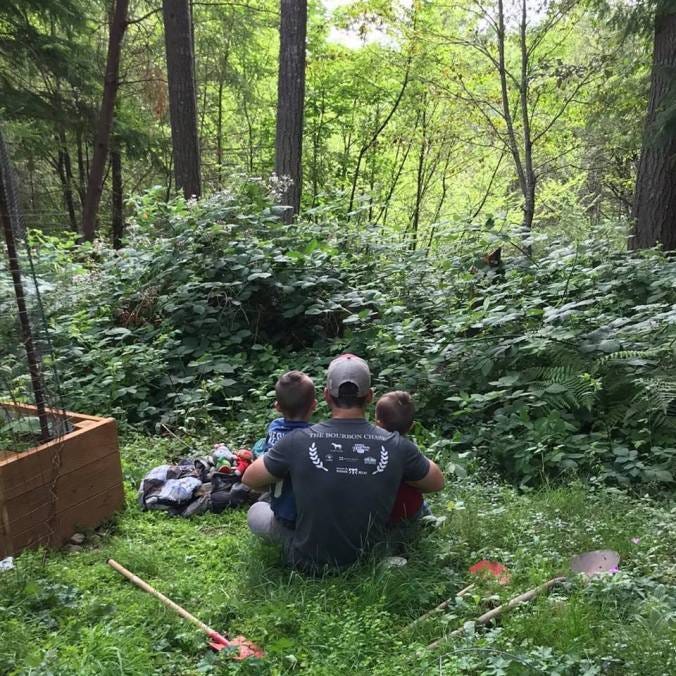
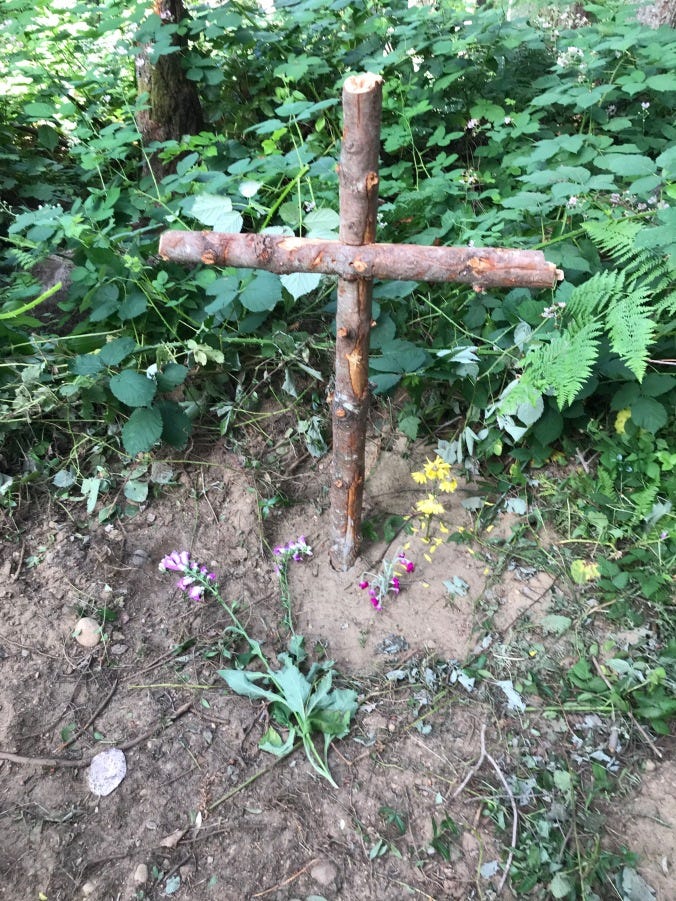
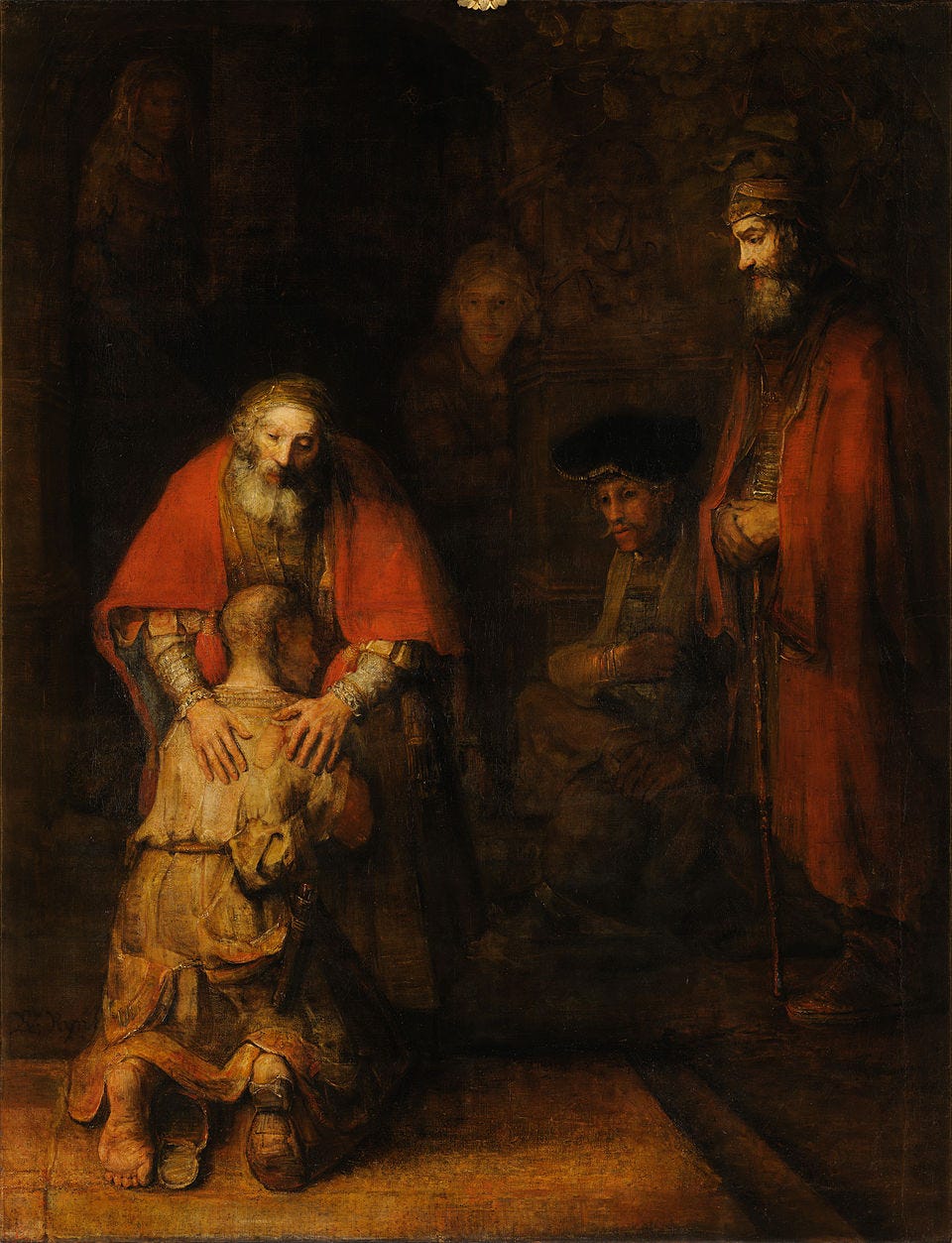
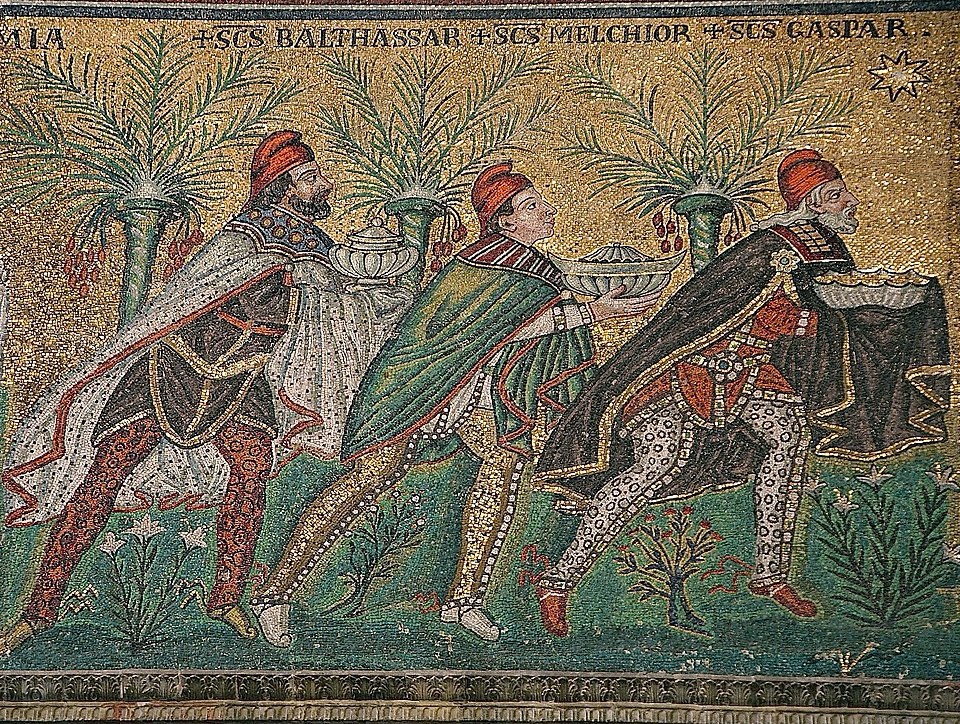
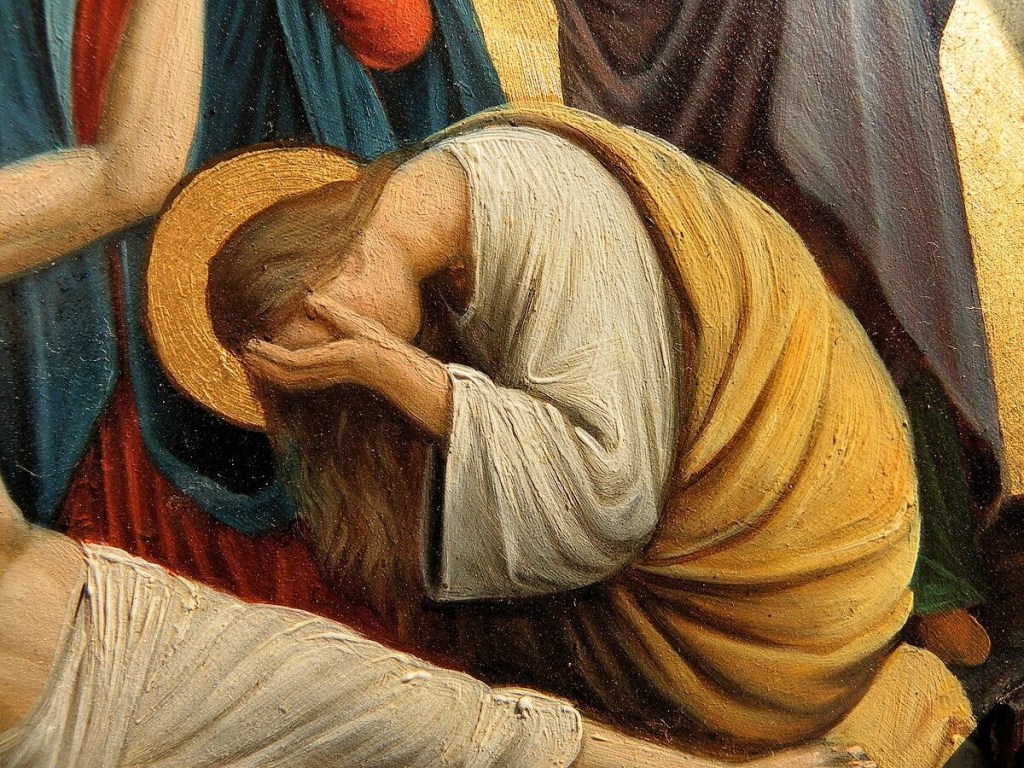
 Enter the Story