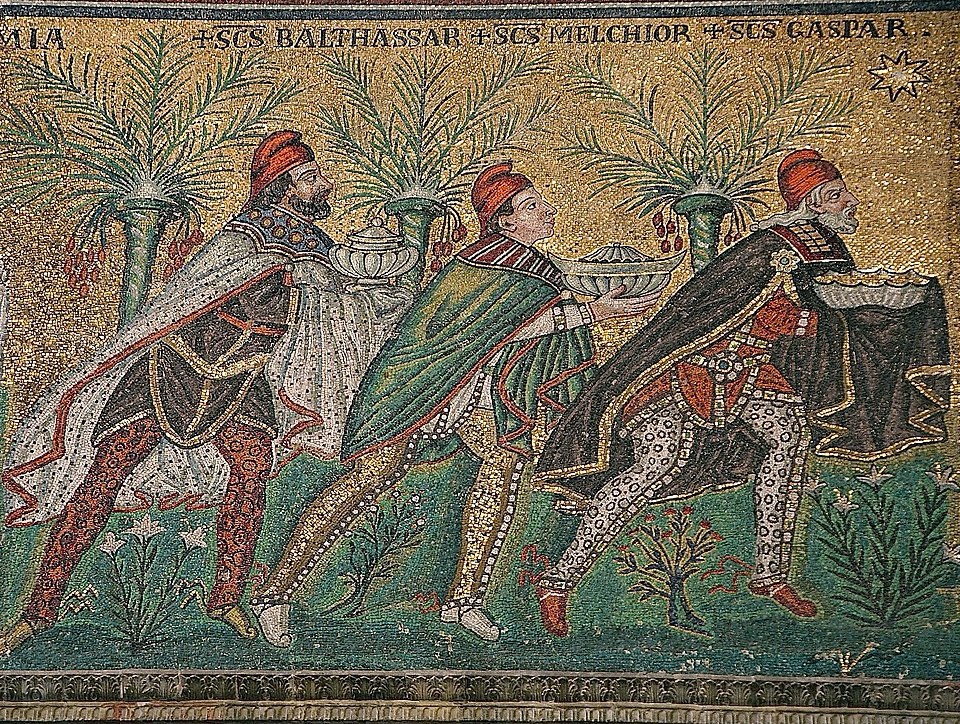
We are now well into the last “trimester” of Advent. The early signs of labor have begun. The young couple has just been sent out to the barn—there’s no room in the inn. Mary is groaning, sheep are bleating, Herod is brooding. The baby should arrive any time now. And all that’s left to do is wait, which may be the hardest part of The Story, isn’t it?
Waiting can be different kinds of hard depending on what you’re waiting for. Waiting for Christmas is different, of course, than the kind that happens in an ER waiting room or waiting for the phone call back from an estranged son or daughter or for any other kind of worried uncertainty. Waiting for Christmas can be difficult for kids (usually parents need more time), but it’s the kind of waiting that has inherent in it a foretaste of the joy of its arrival. I suppose this is because waiting for Christmas is waiting with a kind of certainty, for the coming of an inevitable day. Unlike the diagnosis or the phone call, the arrival of those Christmas gifts is as certain as the arrival of Christmas Day. The experience of our waiting, therefore, depends entirely on what we’re waiting for and our confidence of its arrival.
If we’re honest—or if I’m honest, at least—waiting for Christ to return doesn’t always (usually?) feel like waiting for Christmas. Sometimes it feels more like the kind in the hospital, like all those times we find ourselves or our loved ones waiting there. Yet, there is good reason to believe in the coming of Christ with more certainty than the coming of Christmas, or at least more than the guarantee I’ll live to see another one (even though it’s only five days away!). I have not been promised I’ll live to see another day, much less another Christmas, but I have been promised that Jesus is coming back. I have been promised that when he comes back I will never again fear another day, worry another day, dread another day; I’ll never again weep or mourn or grieve another day, because when Jesus comes he will awaken us to the great gift of eternal life.
But what will that be like? Again, the experience of our waiting depends entirely on what we’re waiting for and our confidence of its arrival. If we can be confident in the arrival of Christ and the gift of eternal life, what will that gift—what will eternal life be like?
We tend to think of the gifts as adding something to our lives that we want but don’t yet have. New toy. New tool. New experience. New upgrade. Something that fills a lack. But the gift of Christ’s return isn’t simply about adding something to our lives that we want but don’t yet have. It’s also about removing something from our lives that we don’t want but have in abundance. Consider all the things you would remove from your life if you could. What would that include? Fear? Backaches? Regret? Your temper? (Your boss?). Well, whatever it is, I want to stress to you this Christmas that other than Jesus himself, the greatest gift of Christ’s return will not be what he brings us, but what he takes away from us.
So I want to take you on a journey—with the wise men, the ones from The Story. There’s an interesting lesson along these lines (about what Christ is coming to take away) hidden in the gifts they bring to Jesus. You remember: gold, frankincense, and myrrh.
We aren’t told very much at all about the wise men, and a lot of our traditions about them are almost certainly incorrect. Matthew calls them “magi”—from which we get “magician”—but the word refers to something closer to astrologers, like cosmic palm readers. They look up at the stars and try to read the future. We also know that kings in the East—particularly Persia, hundreds of miles away—employed magi as advisers. So the famous song gets it wrong in the first line: we three kings of orient are… They were advisers to kings, not rivals to King Jesus.
But while we don’t know much about them, the Bible predicted a number of things about the story where we find them, and those predictions are meant to help us understand the meaning and significance of the Gift at the center of The Story—about his first arrival and final arrival.
First, there is the star. Long before Matthew, way back in the book of Numbers, there is a prophecy given through Balaam: a vision of a star rising out of Jacob, and a scepter rising out of Israel. The point wasn’t astronomy for astronomy’s sake. The point was kingship. God himself was going to come to his people, take his throne, and establish his kingdom. The star would be a sign that God was on the move—God arriving, God drawing near, God coming to reign.
Second, there are the gifts themselves. The first gift is gold, and this one is easy. Gold is associated with royalty. It reinforces the prophecy: a king is here. So when the magi come and ask “Herod the king” (Mt. 2:1) where the newborn “King of the Jews” (Mt. 2:2) can be found, he doesn’t hear it as God’s fulfilled promise. He hears it as a threat. It means Herod is on borrowed time. It means God has come to reclaim his rightful throne. The gift of gold tells us that Jesus is the gift of the world’s true King—that the world’s true King is truly good, truly just, truly faithful: that the world is in good hands.
The second gift is frankincense. This is harder for us, but not for Jewish readers. Frankincense was used by priests in worship and in sacrifices offered to God. In Leviticus, Moses tells the people bring frankincense to the High Priest, who would offer it to God on their behalf. The High Priest was the chief mediator between God and his people, most notably responsible for the sacrifices on the Day of Atonement. He would enter the inner sanctuary of the people and offer a sacrifice of atonement for the people—but also for himself. This was part of the problem of the priesthood. Those who were called to fix the problem of sin were themselves part of the problem. Until Jesus arrived. The gift of frankincense is a sign that Jesus is not only the world’s true King, but also the world’s true High Priest. Not beset with sin like all those who preceded him (as the author of Hebrews stresses), he is able to offer an eternally acceptable offering to God—his entire life—and has thus become the real (not merely symbolic) mediator between God and man. And not for Jews only, but also for outsiders—from the East, like these magi—people from all tribes, tongues, and nations. Jesus makes a way for all of us to become acceptable to God.
So far, so good. God himself comes in the person of Jesus. Jesus is the world’s true King. Jesus is the world’s High Priest. But then comes the last gift, and it is puzzling—myrrh.
Myrrh is not a gift associated with royalty or worship or anything we would call desirable. Myrrh is associated with death. It shows up later in the gospels: the wine mixed with myrrh offered to Jesus on the cross, and the myrrh and aloes used to prepare his body for burial. John tells us Nicodemus brought an extravagant amount of myrrh and aloes to embalm Jesus’ body after the crucifixion. Which means this third gift, offered here at the beginning, is a kind of foreshadowing that is almost cruel in its honesty. It is like giving a cemetery plot at a baby shower. You can imagine the joy of Joseph and Mary—until that last gift appears and the air changes.
But in hindsight we know the meaning of the third gift is necessary for the meaning of the first two. The true King of the world would die for the world. And the true offering that makes us acceptable to God—the sacrifice that opens the way to the Father—would be the offering of Jesus’ own life on the cross. “Father, into your hands I commend my spirit.” The gift of myrrh tells us that the greatest gift from God comes to us not only as the gift of Jesus’ life, but also the gift of Jesus’ death—and resurrection. God packaged Christmas, Good Friday, and Easter all in one gift the day he sent his Son to be born in a barn, wrapped in swaddling clothes, laid in a manger.
And yet there is even more in the package—still unopened. Because Jesus really is the gift that keeps on giving. Isaiah speaks of the day when Jesus returns in the end—when the Christmas Story is not only remembered but fulfilled in full. Isaiah 60 begins like an eruption of light in a world of darkness: “Arise, shine, for your light has come, and the glory of the Lord has risen upon you!” It follows with the nations coming, streaming to the light, all with gifts in tow. The treasures of the nations are being carried in, brought to Jesus like the magi on Christmas morning, as worship. Listen to what Isaiah says:
“They shall bring gold and frankincense, and shall bring glad tidings of praises of the Lord, and they shall…” (Isa. 60:6).
Wait a minute. Does that sound familiar? Did you notice what’s missing when Jesus comes back?
There will be gold. The King has come, the world is his kingdom. There will be frankincense. The High Priest is here, the world is his temple (Rev. 21:22!). But the last gift—the third gift—is missing. When Jesus comes back, there will be gold, there will be frankincense, but there will be myrrh no more. No more myrrh.
And this is where all the threads tie together. When the gift of Jesus comes in its fullness, it will not merely add something to our lives and our world that we don’t yet have. It will remove something from our lives that we have but don’t want. The greatest gift is the gift God takes of eternal life is what will be taken from it, from us: no more myrrh.
The last book of the Bible says it plainly. No more myrrh means no more death. No more myrrh means no more tears. God will wipe away every tear from every eye. No more myrrh means no more pain or crying—no more backaches or heartaches or headaches or bankruptcies or division or divorce. No more sadness. No more loneliness. No more hurricanes. No more cancer. No more fallen soldiers or single mothers. No more child searching the house for a father who isn’t there, who isn’t coming home. No more couples searching the ultrasound screen for signs of life that aren’t there, who will never be coming home. No more homelessness—for the dwelling place of God will be with us, and he will dwell with us. No more myrrh means only life, only light, only love, only joy, only peace.
No more myrrh in eternal life means that all we fear and loathe is this life will be taken away, and all we cherish—and infinitely more—will remain, for good! All that sad stuff will be missing when Jesus comes back to restore this world to its original God-given goodness. (I’m not sure your boss will make it—but hopefully, if so, he’ll be saved, in Paul’s words, “as by fire” (1 Cor. 3)).
So this year, on Christmas morning, if I could just encourage you: after you open your gifts and sit down at the table to give thanks for the Gift of God’s Son, and all he’s bringing with him for us, don’t forget to thank him for that Gift is coming to take away from us. No more myrrh.
 Enter the Story